How to Live
Montaigne's art of living
Description
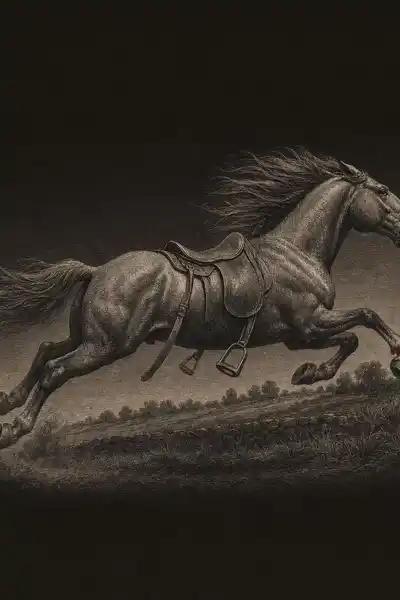
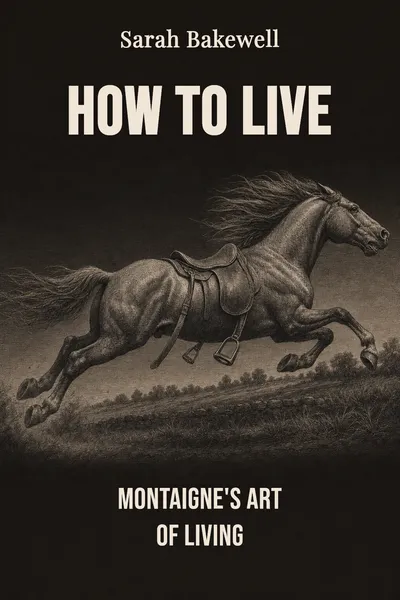
Sometime around 1569 or 1570, a French nobleman was thrown from a galloping horse during a country ride near his estate. He was carried home half-dead, coughing blood, convinced the end had come. What struck him afterwards was not the fear but its absence: dying, from the inside, had felt oddly gentle, like drifting into sleep. Michel de Montaigne turned the accident over in his mind for years. He had gone looking for death and come back with a strange, calming report about it. That habit—taking whatever life threw at him and examining it as if it were a specimen—would become his whole method.
A few years later, at thirty-eight, Montaigne retired from public life to the tower of his family château, lined a room with books, and began writing something that had no name yet. He called the pieces essais—attempts, trials, tries. They wandered. A page on cannibals, a page on thumbs, a page on how he could never remember anything, a page on the smell of his own study. He was not arguing a case or teaching a lesson. He was watching himself think, and putting it down exactly as it came.
Four centuries later people still open him and feel spoken to, as if a friend had left a long letter that somehow anticipated their own confusions. Sarah Bakewell's How to Live takes that peculiar intimacy as its starting point and builds a biography around it—not a march through dates, but a set of answers to the one question Montaigne kept circling.
The question we’re asking : What did a sixteenth-century French landowner discover by writing about himself, and why does it still read like companionship rather than history?What we’ll see : A man, a tower, an accident of a book—and the reasons we keep coming back to him for something we can't quite name.
Table of contents
01 Chapter 1 — A near-death fall and a man who decided to watch himself
Montaigne was born in 1533 into a wealthy family near Bordeaux, the son of a father with unusual ideas about education. As a small child he was woken each morning by music, spoke only Latin at home before he learned French, and was raised, by design, to be gentle and unhurried. He trained as a lawyer, spent years as a magistrate in Bordeaux, and lived through some of the ugliest violence France had known—the wars of religion that set Catholic against Protestant and turned neighbours into killers. None of this, on its own, would have made him remarkable.
What made him remarkable was the horse. Bakewell returns often to the riding accident because Montaigne did. He had always been afraid of death, had circled it in his reading, had absorbed the old philosophical line that to philosophise is to learn how to die. Then he nearly died, and found the reality nothing like the dread. The lesson he drew was quietly radical: perhaps we spend our lives rehearsing a fear the body will handle for us when the time comes. Better to stop rehearsing and start living.

02 Chapter 2 — The essay, invented one afternoon at a time
What Montaigne began writing had no precedent. There were maxims, there were treatises, there were confessions written to God. There was nothing quite like a man sitting down to say, more or less, here is what happened to cross my mind today, and here is where it went. He gave the form its name almost by accident—essais, meaning attempts—and the modesty of the word was the point. He was not delivering conclusions. He was trying things out, and leaving the trying visible on the page.
The subjects are famously scattered. He writes about friendship and about pissing, about the education of children and about the way his kidney stones felt. Bakewell shows how this apparent randomness is actually the method working as intended. Montaigne did not believe you could reach the truth of a person by picking only the dignified parts. The whole of a life—its digestion, its distractions, its inconsistencies—was the material. To leave out the body and the trivial was to lie about being human.
03 Chapter 3 — How to live when everything is trying to kill you
It would be easy to read Montaigne as a man of leisure musing in a quiet tower, but Bakewell is careful to place him in his century, which was anything but quiet. France was tearing itself apart. Massacres, sieges, plague, the constant threat of ambush on the roads—Montaigne wrote his gentle, digressive pages against a background of organised slaughter. The wars of religion had made ideology murderous, and moderation itself a dangerous position to hold.
His answers to how one lives through this were unheroic on purpose. When plague swept through his region he took his household and fled, and he saw no shame in it. He served as mayor of Bordeaux and was criticised for not staying in the city during an outbreak; he shrugged the criticism off. He distrusted the men who were certain enough about God to kill for it, and he distrusted the temptation, in himself, to be swept up in any cause. Keeping a little back from the fever of the moment was, for him, close to a survival skill.
04 Chapter 4 — The friend who read himself so we could read ourselves
Step back from the accidents and the wars and one larger thing comes into focus: Montaigne discovered that the self is a legitimate subject of study—maybe the only one we can report on honestly. Before him, writing about oneself was either boasting or confessing sins to God. He did neither. He simply paid attention to what it was like to be him, on the reasonable assumption that being him was not so different from being anyone, and that the closest evidence we have about the human condition is the one specimen each of us carries around all day.
Bakewell frames the whole biography as a series of answers to the question the book takes for its title, and that framing quietly makes her point. Montaigne never wrote a manual. He would have distrusted anyone who did. What he left instead was a demonstration—here is one person paying honest attention to his own experience, and here is how much company that turns out to be. His wisdom does not arrive as instruction. It arrives as recognition, the small shock of finding a stranger from 1580 describing your own restlessness.
05 Conclusion
Montaigne kept adding to the Essays until his death in 1592, still layering second thoughts onto pages he had written decades before, still refusing the tidy conclusion. The man thrown from his horse never did settle the question he had gone chasing. He circled death, violence, friendship, doubt, and his own contradictions, and left the circling itself as the record. The tower he retired to expecting quiet became the place where he was busiest, watching a mind that would not hold still and writing down every turn.
Related books