

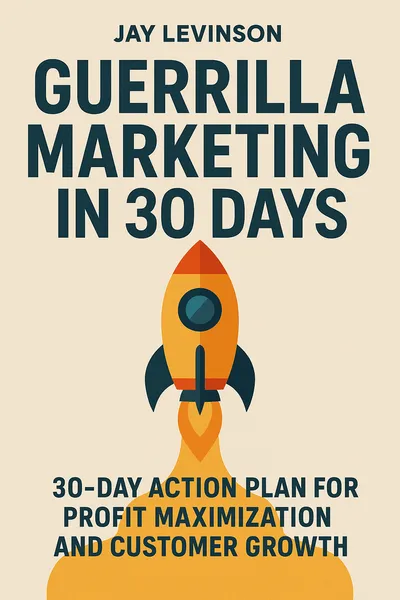
Guerrilla marketing in 30 days
30-day action plan for profit maximization and customer growth
Description
Guerrilla marketing is a strategy that uses unconventional, creative methods to boost sales and attract interest in a brand. It's about investing energy, not just money, and focusing on implementation over conceptualization. Guerrilla marketers target specific market segments, serving them as effectively as possible, rather than trying to appeal to everyone.
They view marketing as an investment, not an expense, and aim to develop marketing strategies that work. The ultimate result of this approach is a marketing plan that includes a simple strategy, a marketing calendar, an evaluation system, and a selection of tactics. The key to success in guerrilla marketing is action, and the ability to stay motivated and focused. It's about doing what's necessary for effective marketing, and addressing today's marketing challenges with consistency and determination.
Table of contents
01Mind-set evaluation
Effective marketers prioritize daily actions that enhance client recognition. They embed a marketing mindset within their team, asking, "How do my actions attract clients today?" This approach turns marketing into a routine, like paying bills.

02Define marketing goals
Setting clear, measurable, and achievable marketing goals is essential for success. By regularly comparing your activities to these goals, you refine your focus and increase your chances of success. Marketing objectives define the results you aim to achieve, aligning with broader business goals and simplifying the design of the customer journey.
03Market research insights
Regular client communication is key to understanding their needs and shaping your business strategy. Keep an eye on competitors, leveraging your strengths and their weaknesses to stay ahead. Monitor market trends, including supplier activities, and innovate to capture untapped segments.
04Identify target audience
Understanding your customers' purchasing habits and preferences is key to effective resource allocation. Focus on distinct buyer groups to tailor marketing strategies that resonate with them. Analyze current clients to identify common traits and attract similar prospects.
05Product positioning strategy
Clarifying your market position is essential as it underpins your entire marketing strategy, conveying your true identity and the value you offer to customers. It's more than just a tagline; it's about how you want to be perceived. A strong positioning statement is unique, highlights your advantages, and plays to your strengths.
06Master niche marketing
Niche marketing stands in stark contrast to the broad approach of mass marketing, focusing on a specific segment of the market rather than attempting to appeal to all consumers. For those with limited resources for a widespread marketing campaign, pinpointing a niche and dedicating all efforts to excel within that space is crucial. It involves selecting a market where your company's unique expertise is valued, allowing for exclusivity, cost-effective operations, and the ability to surpass customer expectations, fostering loyalty.
07Write marketing plan
Our marketing objective is to enhance brand visibility and customer engagement. We aim to target millennials with a focus on eco-conscious consumers, emphasizing our commitment to sustainability as our niche. Our competitive edge lies in our innovative, eco-friendly product range.
08Define customer benefits
Customers buy for the benefits, such as convenience and time-saving, not just features. To stand out, highlight your unique advantages in promotions. For example, Acme Insurance offers tailored plans with swift guidance.
09Establish brand identity
As a marketer, aim to build a strong corporate identity that conveys your product's essence and your company's dedication. This identity reassures customers of your commitment and longevity. Consistent branding fosters an emotional bond with customers, ensuring your brand stands out by offering real benefits.
10Highlight competitive edges
Craft a communication strategy that clearly defines objectives for PR, direct mail, advertising, and signage. Use methods that embody your brand's personality and resonate with your audience. Capture attention with credible messaging, avoiding exaggeration.
11Plan media strategy
Marketing extends beyond advertising, incorporating innovative strategies within a defined budget to deliver impactful messages. A comprehensive plan is essential, guiding resource allocation towards high-quality ads designed to drive sales and tailored to your audience. Effective ads feature captivating headlines, highlight benefits, offer incentives for immediate action, and include appealing visuals.
12Engage in networking
Networking involves building business connections to foster trust and open up future opportunities. Setting clear goals and choosing the right events are essential. Engaging with others, exchanging business cards, and noting key information are crucial steps.
13Forge strategic alliances
Fusion marketing is a cost-effective strategy where two non-competing businesses with similar audiences and values collaborate, sharing resources and audiences to mutual benefit. This approach can lead to reduced marketing expenses and expanded reach. Options include shared advertising costs, event sponsorships, and online affiliate programs.
14Direct selling tactics
Marketing and sales are intertwined, both aiming to convert prospects into paying customers.
15Telephone marketing techniques
Before making a telesales call, it's essential to start with a clear goal and a set of strategic questions. Open with an engaging statement, then explore the customer's challenges, offering a concise explanation of your solution's benefits. Aim to close the deal by encouraging action, maintaining professionalism throughout.
16Create print content
In the realm of guerrilla marketing, printed materials like brochures and sales sheets are crucial. They not only prove your business's credibility but also captivate potential clients, nudging them towards a purchase. These designs must be user-friendly, clear, and persuasive, effectively summarizing sales conversations.
17Execute direct mail
Direct mail marketing, making up over 65% of U.S. Post Office's daily volume, remains an effective strategy due to its personalized, targeted approach.
18Explore tv radio
Depending on your business's focus, radio or TV advertising can be effective. Radio is great for promoting events, while TV excels at showcasing new products or comparisons. Cable TV ads can be cost-effective.
19Differentiate marketing efforts
In marketing, success hinges on crafting an irresistible hook that resonates with your audience's desires and preferences. Memorable tactics include offering recipe booklets, free consultations, humor, catchy jingles, contests, coupons, or bonus services. A hook should be a delightful surprise, not overhyped, sparking enthusiasm and value.
20Optimize public relations
Public relations centers on promoting an organization's positive actions through engaging narratives. It's essential to establish media relationships for effective news coverage. Press releases, pivotal in PR, should detail the news without appearing as advertisements, focusing on the who, what, where, and why.
21Marketing calendar creation
A marketing calendar is essential for maintaining consistent efforts in marketing. It can be simple, like a paper sheet, listing strategies and categorizing them by frequency and budget. Assign activities to specific times, include important dates, set deadlines, and delegate tasks.
22Creative marketing ideas
Incorporating discount coupons into various customer communications can effectively refine your marketing strategy and yield measurable results. Additionally, public speaking on relevant topics can enhance your visibility and establish your expertise, broadening your reputation and fostering future interactions. Organizing contests is also a compelling approach, as the excitement of winning can significantly boost brand awareness.
23Website development
Your website is the cornerstone of customer engagement, offering value to build trust and drive sales.
24Online marketing activity
Permission-based email marketing sends messages to subscribers who have opted in, enhancing brand development, customer relationships, and inquiry responses. It supports creativity, fitting the guerrilla marketing approach. Beyond emails, consider e-zines for ongoing customer engagement, online PR for publicity, writing articles for visibility, and forums for community building.
25Trade show participation
Trade shows are a vital marketing strategy, offering a unique opportunity to engage with potential clients and assess the competitive landscape. To leverage this platform effectively, it's essential to set clear goals, design an inviting booth, and actively promote your participation through various channels. Engaging with attendees thoughtfully and following up post-event are key steps.
26Newsletter relationship building
Newsletters are key for building client relationships, offering a budget-friendly way to keep them engaged and feeling valued. They showcase commitment and can attract new customers. For maximum impact, they should be regular, engaging, and filled with valuable advice, positioning you as an expert.
27Budget for marketing
Many companies assign the remaining funds after covering expenses to marketing. This approach is flawed. Instead, you should determine your marketing budget beforehand and strive to maximize the return on each dollar spent on marketing.
The budget will depend on your business's current phase. Remember, to increase revenue at any point, you'll need to invest more in marketing. Consider marketing not as a regular cost like rent, but as an investment.
28Marketing plan execution
To enhance your marketing execution, assign tasks and deadlines within your team, ensuring clear directions and resource allocation. If outsourcing, designate someone to manage those relationships. Emphasize action over perfection, allowing for adjustments along the way.
29Combat marketing complacency
To thrive, businesses must innovate, not just replicate past successes. Prosperity comes from setting new standards and embracing guerrilla marketing's spirit of progress. Step back to view your business through your customers' eyes.
30Enhance marketing continuously
Marketing should be dynamic and innovative, constantly seeking improvement. Reflecting on a 30-day program reveals strengths and areas for growth, guiding future strategies. The essence of guerrilla marketing lies in creativity and the willingness to experiment, learning from both successes and failures.