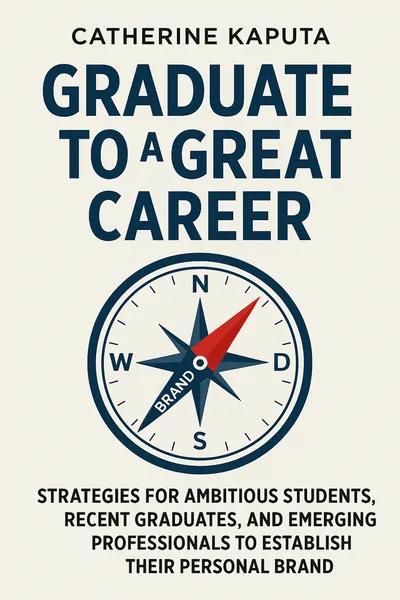
Graduate to a great career
Strategies for ambitious students, recent graduates, and emerging professionals to establish their personal brand
Description
In today's competitive job market, having a degree alone is not sufficient. To truly stand out, you must market yourself by developing a strong personal brand. Take inspiration from successful companies and employ proven branding tactics to differentiate yourself and effectively sell your skills. Emphasize your unique abilities, passion, and the value you can bring to potential employers.
The job search process can be both frustrating and liberating. Use this opportunity to build a platform that will propel your career forward. With the right tools and mindset, anything is possible. Remember, you are your most valuable asset. Make the most of your talents to explore new career paths. Be emotionally invested in your professional journey and take charge of your own success.
One key to success is leveraging connections and relationships. Network extensively, particularly with alumni. Tailor your resume and cover letters to align with specific job descriptions. Pay close attention to feedback and continuously improve your approach. Persistence and positivity are crucial. With hard work, you will eventually land your dream job.
Remember to add a blank line after each paragraph to create clear separation and improve readability. Keep the text concise while retaining all the original information. Thank you!
Table of contents
01Set your foundation
In the current job market, a strong personal brand is essential for young professionals aiming to differentiate themselves.
Academic achievements alone are insufficient; employers seek a blend of theoretical and practical skills.
Personal branding involves highlighting one's unique strengths and experiences, creating a professional identity that captures attention before meeting potential employers. It's about defining your value and ensuring it's communicated effectively, rather than leaving it to chance.
The digital era has made personal branding even more critical, as applicant tracking systems and online presence assessments are standard in the hiring process. A cohesive personal brand across digital platforms is necessary to pass initial screenings and to make a positive impression. This digital footprint can set the stage for a more confident and authentic engagement during interviews, where a well-crafted professional narrative can showcase one's unique value proposition.

02Clarify your career destiny
Discovering your career destiny is more of a journey than a single decision made in college.
While college offers a chance to explore interests, the truth is that most successful careers are nonlinear. A small percentage of college students immediately find their perfect career. However, personal branding provides the flexibility to pivot across industries, leveraging skills, experience, and credentials to explore various roles until finding the best fit.
Online platforms like LinkedIn showcase the paths of successful individuals, offering insights into their education, early roles, and skill-building jobs. It's important to differentiate between passions and strengths, as career success often aligns more closely with utilizing strengths. Passion might not always lead to financial stability and could be pursued as a hobby instead.
03Learn to pitch yourself
Creating a personal brand and elevator pitch is essential for differentiation in the competitive job market.
Your unique selling proposition (USP) should encapsulate what sets you apart, focusing on your unique skills, experiences, and personality traits.
Think about what you offer that others don't and craft a statement that's both memorable and reflective of your true self.
For instance, if you're a natural at fostering relationships, make that a centerpiece of your USP.
Your USP should also clearly communicate the value you bring to potential employers.
Identify the specific needs you can meet and problems you can solve.
04Adopt a 70/30 job hunt approach
In today's job market, securing a position requires a strategic approach that goes beyond just submitting online applications. The 70/30 job search strategy suggests spending 70% of your efforts on uncovering unadvertised jobs and 30% on applying to posted vacancies. This method acknowledges that many roles are filled through networking, referrals, and direct contact with hiring managers rather than through job boards.
To effectively implement this strategy, organization is key. Maintain detailed records of your job search activities, including applications, meetings, and follow-ups. This will help you efficiently manage your leads and stay on top of your job hunt.
05Build memorable marketing materials
Creating a standout resume is akin to crafting a personal advertisement, aiming to capture a recruiter's attention with a design that reflects your unique brand. In today's job market, where large companies often use applicant tracking systems (ATS) to filter resumes, it's crucial to tailor your resume for each job application, highlighting the skills and experience relevant to the position. An effective resume is concise, typically one page, with a clean, professional layout. It should weave your background into a cohesive career narrative, clearly demonstrating why you're the ideal candidate.
This involves summarizing key achievements in bullet points, for example, detailing how you contacted 100 customers daily, resulting in 15 follow-ups and a 20% increase in sales, or how you developed a marketing strategy that boosted sales by 25%. Regularly update your resume with new skills, experiences, and accomplishments to facilitate customization for different applications, ensuring it includes keywords from the job description to pass ATS screenings.
06Ace the interview
The reality that most job interviews are decided within the first few moments underscores the importance of making a stellar first impression. Dressing professionally and presenting yourself at your best are crucial steps. Projecting energy and confidence through your handshake, posture, and eye contact, coupled with a smile and an upbeat demeanor, sets a positive tone.
A firm handshake and a well-prepared response to common greetings can further solidify this impression. Demonstrating your fit for the role involves finding common ground with interviewers, whether through shared interests or discussions about the company and industry. Preparing engaging stories in response to standard interview questions like "Tell me about yourself" and "Why do you want to work here?" helps make your answers memorable. Mastering the art of turning potential negatives into positives, much like a skilled politician, can also work in your favor.
07Become an in-demand candidate
In the digital era, your online persona is a key component of your professional image. Begin by sanitizing your social media profiles to reflect a professional demeanor. Scrutinize your content through the lens of an employer, removing anything that doesn't align with a professional brand. A pristine online presence paves the way for a positive professional identity.
Enhance your LinkedIn profile as it's a primary resource for recruiters. Include a professional headshot, a compelling summary of your career journey, and detailed sections on your work experience, education, and skills. Aim to connect with a network of at least 50 professionals to bolster your visibility.
08Manage your online presence
In today's digital age, cultivating an online personal brand is crucial for job seekers. Start by purchasing a custom domain, like www.janesmith.com, to create a professional website or blog that showcases your skills, experience, and vision. This not only gives you control over your narrative but also highlights your tech-savviness.
Next, ensure your LinkedIn profile acts as an always-on resume by crafting an engaging headline and summary, showcasing your achievements, and actively participating in relevant groups. Consider creating a career-focused Facebook presence to engage with target employers and share your professional passions.
09Continuously expand your network
Networking is the most effective method for job hunting, with a significant portion of positions being filled through this approach. It involves developing relationships and connections that can recommend and endorse you, with referrals being a top source for quality candidates according to recruiters. To achieve professional success, it's essential to build four key networks:
Casual acquaintances are people you connect with weakly, but they can be great sources of job leads as they move in different circles. Inform everyone you meet about your job search and seek their assistance. Close confidants, including friends and family, provide support. Use them for advice, moral support, and to set up informational interviews to learn about your dream job.
10Close the deal
Making a strong first impression in a job interview is crucial, but equally important is leaving a memorable final impression that conveys your enthusiasm and readiness for the role. To reinforce your unique strengths and communicate your eagerness, consider being direct towards the interview's end by asking questions about how your candidacy stands or if there's anything more they need from you.
This demonstrates self-confidence and a straightforward approach. Expressing passion for the company's mission and how the role aligns with your interests is vital. Show this enthusiasm through your tone and body language, ensuring you don't come across as indifferent. Highlighting your fit for the company culture by sharing relevant experiences and discussing how you can add value is key. Don't forget to ask about the next steps in the hiring process, including when to expect feedback and if further information is required from you.
Related books