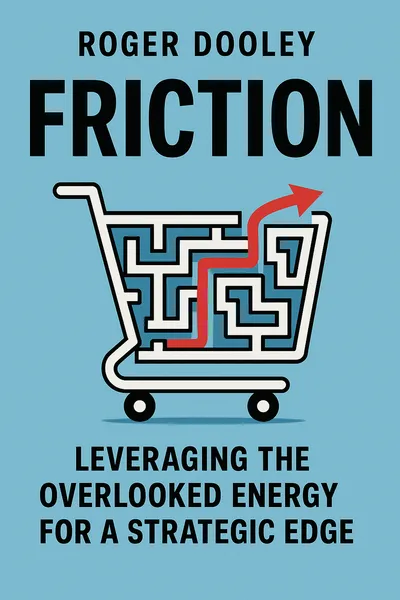
Friction
Leveraging the overlooked energy for a strategic edge
Description
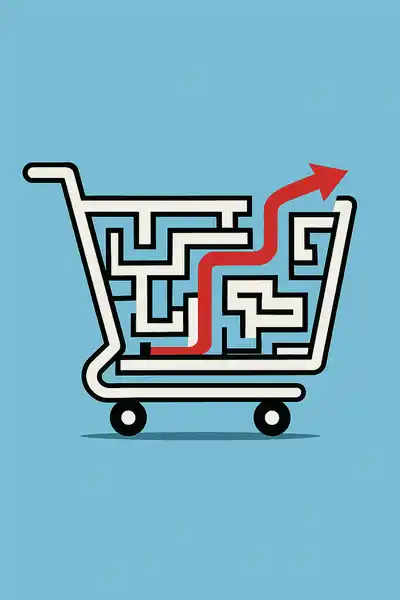
In 2016, e-commerce sales reached nearly $2 trillion, but an estimated $4.6 trillion in merchandise was left in abandoned shopping carts. Over two-thirds of online shopping carts are abandoned, often due to "friction" - unnecessary time, effort, or money spent during the task.
Jeff Bezos of Amazon emphasizes reducing friction to increase sales, a principle that has significantly contributed to Amazon's success. Friction exists not only online but throughout organizations, and addressing it can boost revenues. Highlighting friction to others encourages them to seek solutions, improving efficiency and satisfaction across the board.
Table of contents
01 Amazon's battle against friction .
Amazon's business model is designed to minimize consumer friction, which has been a key factor in its remarkable growth. Kintan Brahmbhatt, Amazon's Product Design Manager, is at the forefront of this strategy, constantly seeking ways to streamline the customer experience. For example, Amazon's streaming service now offers a feature where users can pause a program and instantly access details about the actors and their filmographies.
This not only sets Amazon apart from its competitors but also integrates seamlessly with its patented 1-Click ordering system. Amazon has introduced several initiatives to reduce friction. Customers stay logged in to avoid repeated sign-ins, and their credit card information is remembered to bypass re-entering payment details for every purchase. In 2008, Amazon launched "frustration-free packaging," which consists of easy-to-open cardboard boxes that don't produce plastic waste. The company has also addressed shopping cart abandonment by eliminating shopping carts; instead, customers can use the 1-Click button, and Amazon's fulfillment system takes over. Amazon is exploring "Zero-Click" ordering through subscriptions, virtual reorder buttons, and voice ordering via Alexa/Echo.

02 A quick overview of friction .
Reducing friction has been a key driver of disruption across various industries, from retail to transportation. In the post-Civil War era, mail order catalogs emerged, allowing rural customers to enjoy lower prices and a wider selection of merchandise. This was exemplified by Aaron Montgomery Ward and George Thorne's first general merchandise mail order catalog in 1872, and Richard Warren Sears' first mail order catalog in 1886. By 1895, Sears Roebuck's catalog had grown to 532 pages, generating millions of orders per year.
In 1962, Sam Walton opened his first Walmart in rural Arkansas, offering easy access, ample parking, and low prices. Today, Walmart operates 11,200 stores in 27 countries. Railroads also played a significant role in reducing the friction in transporting goods. In 2009, Garret Camp and Travis Kalanick developed an app that would become Uber, revolutionizing the taxi industry by making it easier to get a cab, ensuring the most economical route, and efficiently handling payment details.
03 The principle of friction .
The principle of friction is a key concept in economics and human behavior, acting as an invisible force that can take various forms such as transaction costs, taxes, or search costs. It posits that the level of action is inversely proportional to the level of friction, meaning that when friction is reduced, people are more likely to engage in an activity, and the opposite is true as well. For example, reducing friction in the sales process can lead to increased purchases, while adding friction may deter people from buying. When presented with options, people generally prefer the one with less friction, and this preference can be used to steer their choices.
Friction can be minimized by making the preferred option the default, utilizing the concept of "passive decision making" or "the path of least resistance". Studies indicate that people tend to choose the option that requires the least effort. Thus, setting desirable outcomes as the default can enhance engagement.
04 The four major forms of friction .
In the realm of business operations and customer interactions, four primary types of friction can be identified: Decision Friction, Customer Experience Friction, Technical Friction, and Internal Friction.
Decision friction
Amazon combats analysis paralysis by guiding customers with labels like "Recommended" and "Bestseller," leveraging reviews for social proof, and displaying comparative information to simplify choices. They streamline the process by offering free shipping and easy returns, and often make the most desired option the default, subtly nudging customers towards a purchase. These strategies help reduce the overwhelming number of choices and facilitate decision-making for customers.
Customer experience friction
In the digital age, customer loyalty hinges on seamless experiences rather than mere delight. To foster loyalty, first, resolve issues in one interaction, avoiding customer repetition. Second, simplify sales by recommending the best solution, reducing buyer's remorse. Third, continuously refine the customer experience to remove friction. Fourth, adopt all-inclusive pricing to avoid nickel-and-diming customers. Lastly, deliver value with minimal inconvenience. These strategies prioritize ease and value, key to customer retention and satisfaction.
05 The widespread impact of friction.
Friction, particularly in laws and regulations, is a ubiquitous phenomenon that can significantly impact businesses. For instance, starting a business in China takes approximately 46 days, while in India, it can take 88 days or longer. This disparity is partly due to India's bureaucratic environment and China's emphasis on growth, which may contribute to China's faster economic growth rate. Yinchuan, China, serves as an example of a government entity actively working to reduce friction. The city's leaders have centralized services and introduced a "One Stamp Rule," which requires only one stamp of approval, thereby streamlining the process of opening a business. Government regulations and procedures often create friction, but as Yinchuan demonstrates, motivated leaders can transform a bureaucratic culture into one that is more responsive to citizens and businesses.
06 Strategies to reduce friction .
Manipulating friction in both personal and professional settings can significantly influence behavior, fostering positive habits and deterring negative ones. Companies like Google have effectively used friction to shape employee behavior, such as by making unhealthy snacks less accessible, thereby reducing their consumption. Nextdoor added friction to its crime reporting feature to decrease racist posts, requiring more detailed information for a report. A real estate firm learned the hard way that removing web forms in favor of phone inquiries led to a drop in leads, but reintroducing a more complex web form increased phone leads again. Indiana University simplified its enrollment process for online education, catering to multitasking working adults, which resulted in a significant increase in enrollments. Schindler introduced a 'destination elevator' system to increase efficiency but had to revert to the conventional method due to confusion among users.
Related books