Free
Exploring the impact of zero cost
Description
In the contemporary business landscape, the strategy of offering free goods or services is not just a marketing gimmick, but a profitable business model. This isn't confined to the digital economy; it's a global trend where 'abundance thinking' is driving commerce more effectively than 'scarcity thinking'. The concept of 'free' is evolving into a business strategy that could be vital for survival.
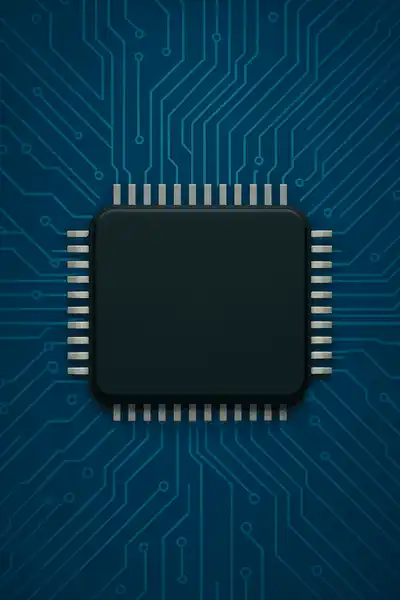
The online economy is witnessing a dramatic reduction in costs, with the primary inputs of the industrial economy falling at an unprecedented rate. For instance, in 1960, a transistor cost $10, but today, you can buy two billion transistors for $300 in Intel's latest microprocessor chip. This equates to approximately 0.000015 cents per transistor. Such cost reductions are significantly lowering the expenses for the three fundamental elements of online commerce: processing power, bandwidth, and storage capacity.
Table of contents
01 Unraveling the concept of 'free' and its influence .
The concept of "free" encompasses various meanings that ultimately involve shifting the cost of a product or service among individuals, across time, or into nonmonetary markets. Chris Anderson, in his observations, highlights the complexity and power of the word "free," which can raise suspicions yet attract attention like few other things. The phrase "there's no such thing as a free lunch" originates from a tradition where saloons offered "free" food to customers who purchased a drink, effectively functioning as a cross-subsidy.
Free offerings have disrupted industries, including radio, television, publishing, and more. For instance, community newspapers may transition from subscription-based models to free circulation, increasing their value to advertisers. The publishing industry demonstrates the impact of free, with different price points for various formats, such as free web versions, newsstand sales, and subscriptions.

02 The impact of digital electronics on the notion of 'free' .
The fundamental reason why most products carry a price tag is that they incur costs during production, and these costs need to be recovered. However, digital markets defy this norm. The cost to replicate most digital goods is virtually nil, leading to a situation where digital producers will inevitably face competition from free alternatives. Recognizing this, it is prudent for producers to explore how to leverage a zero-cost strategy to their advantage and strive to be pioneers in this approach. The digital economy today is propelled by three key elements: computing power, data storage capabilities, and network bandwidth. The principle known as Moore's Law, which states that the computing power available at a fixed price point doubles approximately every two years, is a familiar concept. Yet, the costs of data storage and bandwidth are decreasing even more rapidly. Chris Anderson has noted that never before in history have the core components of an industrial economy plummeted in cost so dramatically and persistently, fueling the emergence of a new kind of 'Free' that transcends mere promotional tactics or subsidies. In a world accustomed to rising prices, the cost of products based on these technologies is on a continuous decline, approaching as close to zero as feasible.
This trend has practical implications for digital product developers, who can be confident that future production costs will be lower than current ones, allowing for innovative pricing strategies. Products can be sold at future projected costs, with the assurance that when the future arrives, the actual costs will be reduced. The combined effect of advancements in processing, storage, and bandwidth is that the cost of online offerings will eventually near zero, enabling prices to be rounded down. This doesn't mean that all online content will be free, as market forces of supply and demand still apply, but the long-term trajectory for digital goods is a downward one.
03 Freeconomics – understanding the functionality and implications of 'free' .
For centuries, economists have recognized a fundamental truth: in a competitive market, prices gravitate towards the marginal cost. This concept remained largely theoretical until the advent of the Internet, which has become the epitome of competitive marketplaces. Here, the concept of offering services or products for free has evolved from a mere option to an inevitable outcome, propelled by the inherent dynamics of market competition. Embracing this reality and pioneering a business model that leverages the concept of 'free' while still generating revenue is crucial. This approach demands innovative thinking and a willingness to experiment to discover the most effective strategy. Early adopters of this model can gain a significant advantage, potentially securing a lasting competitive edge. The shift from a scarcity mindset to one of abundance is essential, as it aligns with the direction in which all industries are inevitably moving.
Historically, companies have employed various strategies to limit competition and maintain high prices, such as securing copyrights, patents, and trademarks. This approach allowed firms like Microsoft to charge a premium for software, despite minimal production costs. Similarly, industries such as pharmaceuticals, film, and semiconductor manufacturing have had to set high prices to recover the substantial costs of developing their initial products. These strategies, rooted in scarcity, aimed to restrict access and maximize profits. However, the digital marketplace challenges these traditional models by offering unlimited shelf space, enabling the distribution of digital copies at virtually no cost, and providing open access to distribution channels. This shift towards an economy of abundance necessitates a reevaluation of business strategies, where offering free versions becomes a critical element of success.
Related books