Francis Crick
Crick decoded life's instructions for science
Description
On the morning of February 28, 1953, Francis Crick walked into the Eagle, a pub a few minutes from the Cavendish Laboratory in Cambridge, and — by the account that has hardened into legend — announced that he and his American collaborator had found the secret of life. He was thirty-six, had no doctorate to his name yet, and had spent most of the previous decade drifting between physics, the war effort, and a biology he had come to late. The claim sounded like the kind of thing a loud man says over lunch. It happened to be true.
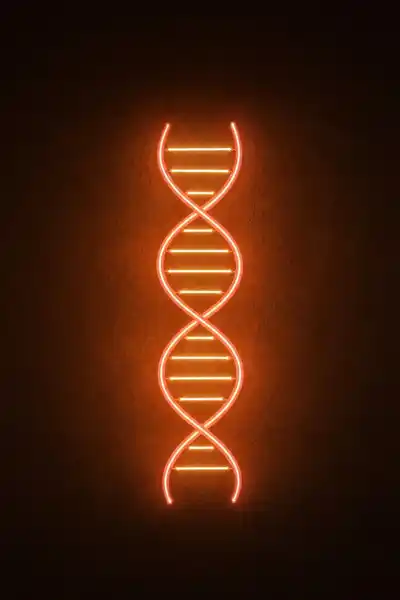
What Crick and James Watson had worked out was the structure of DNA: two strands twisted into a double helix, the bases on the inside pairing in a way that immediately suggested how the molecule copied itself. But the structure was only the opening move. Over the thirteen years that followed, Crick pursued something larger and stranger — the idea that heredity was, at bottom, a code. Not a metaphor for a code. An actual cipher, written in a four-letter alphabet, read three letters at a time, instructing cells to build proteins. By 1966 most of that code had been cracked, and Crick had been at the center of nearly every step.
Matt Ridley's short biography makes a large claim for this run of work: that Crick belongs with Galileo, Darwin and Einstein, and that the years 1953 to 1966 amount to one of the great revolutions in the history of science. The interesting thing is how a man with no laboratory of his own, who rarely ran an experiment, who did almost all his thinking out loud with one partner at a time, came to sit at the heart of it.
The question we’re asking : How did a latecomer to biology, working mostly through conversation, end up uncovering what living things actually are?What we’ll see : The unlikely path that brought Crick to Cambridge, the discovery that started it all, the decade-long hunt for the code itself, and what it means to call life something we can read.
Table of contents
01 Chapter 1 — The talker who couldn't keep a job
Francis Crick was born in 1916 near Northampton, the son of a shoemaker, and trained first as a physicist at University College London. His doctoral work, on the viscosity of water under pressure, was — by his own cheerful admission — about as dull a subject as physics could offer. Then a German bomb fell on the apparatus during the war, and that was the end of that. He spent the rest of the conflict designing mines for the Admiralty, useful work that left him, at thirty, with no degree finished, no clear field, and no obvious future.
What he did have was an unusual way of deciding what to study. Crick noticed that he kept gossiping about two subjects — the brain and the boundary between living and non-living matter — and reasoned that the things he chose to chatter about were the things he actually cared about. He called it the gossip test. It pointed him toward biology, a field in which he had almost no formal grounding, at an age when most scientists have long since settled into a specialty.

02 Chapter 2 — Two men and a model
In 1951 a twenty-three-year-old American named James Watson turned up at the Cavendish, and the pairing turned out to be one of the most productive in modern science. Watson was brash, impatient, and convinced — as Crick was — that the structure of DNA was the prize worth chasing, even though it was not, strictly, what either of them was being paid to study. They shared an office, and they shared the conviction that the answer would be a model: a physical thing, built of wire and cardboard, that obeyed the known rules of chemistry.
The crucial data was being produced ninety miles away in London, at King's College, by Rosalind Franklin and Maurice Wilkins. Franklin's X-ray photographs of DNA were the best in the world, and one in particular — the image later known as Photograph 51 — pointed clearly to a helix. Watson saw it, without Franklin's knowledge, on a visit early in 1953. Ridley does not soften this. The Cambridge pair had something the London researchers had measured but not yet pieced together, and the question of credit has shadowed the discovery ever since.
03 Chapter 3 — Cracking the cipher
The double helix told you that DNA stored information and copied it. It did not tell you what the information said, or how a cell turned it into anything. That problem occupied Crick for the next thirteen years, and it is here, Ridley argues, that his genius shows most clearly — because almost all of it was thinking rather than experiment. Crick worked out the logical shape of the answer years before the experiments confirmed it.
His central move was to treat heredity as a coding problem. A protein is a chain of amino acids, of which living things use twenty. DNA is a chain of four bases. So something had to translate a four-letter language into a twenty-letter one. Crick reasoned that the bases must be read in groups: pairs would give only sixteen combinations, too few, but triplets give sixty-four, more than enough. The code, he concluded, was read three letters at a time. He was right, and he reached the conclusion largely on the back of an envelope.
04 Chapter 4 — What it means to read life
Step back from the molecules and what Crick changed is our answer to an ancient question: what is the difference between a living thing and a stone? For centuries the answer involved some special vital force, a spark that chemistry alone could not account for. Crick's revolution dissolved that. The thing that distinguishes the living, it turned out, is information — a coded message, copied and read by ordinary chemistry, with no spark required. Ridley's Crick is the man who finished the job Darwin started, by showing what the units of inheritance actually are.
The other thing his career reveals is how this kind of breakthrough actually happens. The popular image of the lone genius fits Crick badly. He worked with one partner at a time — Watson, then Brenner — and did his hardest thinking in conversation, testing ideas by saying them aloud to someone clever enough to push back. He ran few experiments and built no empire of graduate students. His contribution was to see the logical shape of an answer and hold his nerve about it for years while others did the measuring. The code was solved by a community; Crick's gift was for asking the community the right question.
05 Conclusion
Crick died in 2004, at eighty-eight, still working on the brain in a laboratory in San Diego, dictating edits to a manuscript from his hospital bed. He had spent his last three decades on consciousness, a problem he suspected might yield to the same approach that had cracked heredity: assume there is a mechanism, find it, describe it without appeal to anything mystical. He did not live to see that question answered, and it may not be answerable in his lifetime's sense. But the thirteen years that began in the Eagle had already secured his place.
Related books