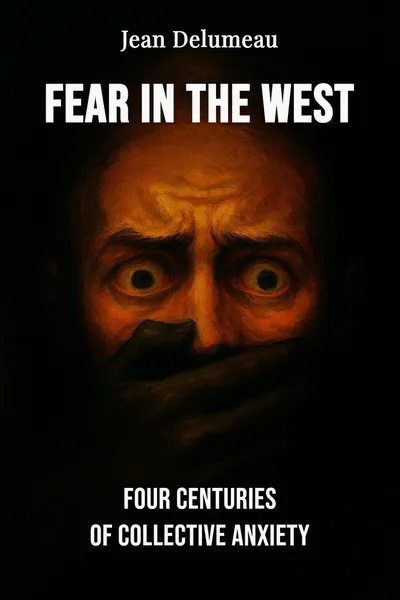
Fear in the West
Four centuries of collective anxiety
Description
In the late 1970s, a French historian named Jean Delumeau set out to write a book nobody had quite written before: a history not of kings, battles, or harvests, but of an emotion. His subject was fear — the collective, structural fear that ran through European life between roughly the fourteenth and eighteenth centuries. Published in 1978 as La Peur en Occident, the project came out of the Annales school, the movement that had already taught historians to study the slow rhythms of climate, demography and daily habit rather than the events on the surface. Delumeau simply asked what it felt like, underneath, to be alive in those centuries.
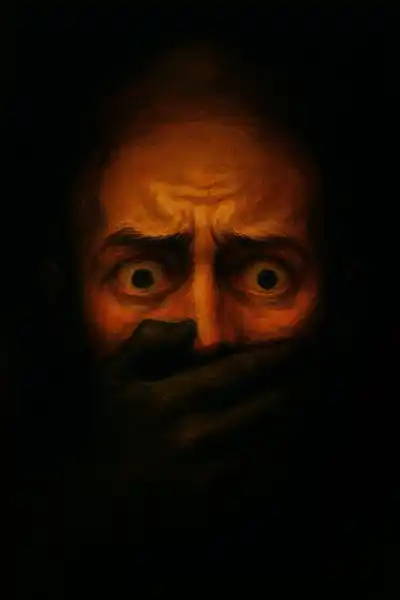
The answer he assembled was unsettling. The Europe he describes is a civilization that lived under a low, continuous hum of dread. Sermons warned of damnation. Travelers crossed themselves before entering a forest. Towns closed their gates at dusk against a darkness nobody would venture into willingly. Where modern readers might expect the occasional panic, Delumeau found something closer to a permanent climate — fear as the water everyone swam in, built into religion, geography, and the way communities defined who belonged and who did not.
What makes the book more than a grim inventory is the move Delumeau makes with all this material. He refuses to treat fear as mere backdrop. He treats it as something that did work in the world — that shaped institutions, redrew the map of the acceptable, and decided, again and again, who would be blamed when things went wrong. Four centuries of anxiety, read not as a mood but as a force.
The question we’re asking : What were Europeans actually afraid of between the fourteenth and eighteenth centuries, and what did that fear do to them?What we’ll see : How a leading historian turned a vast, inherited dread into a subject with its own shape, its own objects, and its own power to move history.
Table of contents
01Chapter 1 — A civilization that admitted it was afraid
Delumeau's first move is also his boldest: he insists that fear can be a legitimate object of history. For a long time, the discipline had treated emotions as too private, too fleeting, too unmeasurable to study. You could count grain prices and baptisms; you could not count dread. But by the 1970s the Annales historians had widened the field to include mentalités — the shared mental furniture of a period, the things people took for granted without ever arguing about them. Fear, Delumeau argued, was exactly that kind of material, and the sources were everywhere once you decided to look.
He read sermons, chronicles, legal records, treatises on witchcraft, travel accounts, and the moralizing literature that poured off the early presses. What emerges is a distinction he keeps returning to: between peur, a sharp fear with a clear object in front of you, and angoisse, a diffuse anxiety with no single cause you can point at. The Europe he reconstructs lived with both, and the second was arguably the heavier burden. People were afraid of specific things, yes, but they were also marinated in a general sense that the world was dangerous and salvation uncertain.

02Chapter 2 — The sea, the night, the stranger
Before reaching the grand theological terrors, Delumeau catalogues the ordinary ones, the fears woven into geography and routine. The sea is the first. For most Europeans it was not a holiday destination but a hostile edge of the world, associated with shipwreck, monsters, and the unknown beyond the horizon. Sailors were a caste apart, half-admired and half-pitied, and coastal populations lived with a wariness toward the water that reads, in the sources, almost like a moral position.
Then there was the night. It is hard now to feel the full weight of darkness in a world without reliable light, but Delumeau works to restore it. Night was when the familiar landscape became treacherous, when thieves and wolves and worse were abroad, when the boundary between the living and the dead felt thin. Towns locked their gates; travelers sought shelter before dusk; curfews were as much about dread as about public order. The dark was not an absence of light so much as a presence of threat.
03Chapter 3 — Satan, the plague, and the end of the world
Above the ordinary fears, Delumeau places the great ones, and here the Church is central. His argument, developed further in a later book, is that Western Christianity in this period became heavily weighted toward sin, judgment, and the terror of damnation. Preaching dwelt on hell. Art depicted the torments of the damned in meticulous detail. The faithful were taught to examine themselves constantly for signs of guilt, and the reassurance of grace often arrived, if it arrived, only after a long passage through dread.
Satan looms over this landscape. Delumeau traces a growing conviction, intensifying from the fourteenth century onward, that the devil was not a distant abstraction but an active, scheming presence working through human agents. This conviction had consequences. It fed the witch hunts that peaked between roughly 1560 and 1630, in which tens of thousands of people, overwhelmingly women, were tried and executed across Europe. The witch was fear made flesh: the internal enemy, the neighbor secretly in league with the adversary.
04Chapter 4 — Fear as the engine of history
Step back from the catalogue and Delumeau's deeper claim comes into view. Fear, in his account, is not the emotional weather behind history — it is one of history's working parts. It does things. It builds institutions, hardens boundaries, and, most insistently, it manufactures scapegoats. The pattern he traces again and again is the same: a diffuse anxiety, unbearable because it has no object, searches for one and finds it in a visible, vulnerable group. The witch, the Jew, the heretic, the stranger, the leper — each served as a name for a dread that had none.
This is why he thinks the subject deserves a history of its own rather than a footnote. The persecutions of the early-modern period were not irrational outbursts that interrupted an otherwise reasonable civilization. They were the logical product of a culture that had organized itself around fear and needed somewhere to put it. Delumeau's word for this is the besieged mentality — a collective sense of being surrounded by enemies, which in turn justifies the search for enemies within. The fear comes first; the scapegoat is recruited afterward to explain it.
05Conclusion
Delumeau began with a simple refusal: he would not treat fear as too soft a subject for serious history. By the end, that refusal has produced a portrait of four centuries in which dread is not atmosphere but structure — present in the fear of the sea and the night, concentrated in the terror of Satan and the plague, and discharged, repeatedly, onto whoever could be cast as the enemy within. The low hum he set out to recover turns out to have been loud enough to redraw maps and fill courtrooms.
Related books