Fail fast or win big
A strategic blueprint for immediate startup launch
Description
The traditional approach to entrepreneurship, characterized by meticulous business planning and product or service launch without significant customer feedback, is gradually becoming outdated. This is primarily due to the dynamic nature of markets, where rapid evolution can swiftly render a business plan irrelevant. Moreover, adhering to this traditional approach poses the risk of depleting resources before ascertaining whether there is genuine demand for the offering.
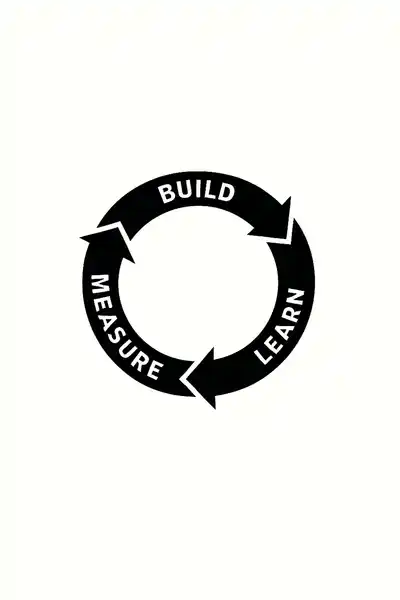
In contrast, the Lean Model Framework has gained prominence for its emphasis on customer feedback and iterative development. This approach encourages entrepreneurs to swiftly develop a product, service, or company and promptly solicit feedback from customers. By prioritizing real-world feedback, entrepreneurs can iterate rapidly and refine their offerings based on customer responses. This iterative process mitigates the risk of failure and enhances the likelihood of developing a product or service that resonates with customers.
The Lean Model Framework is characterized by its adaptability and responsiveness, making it particularly well-suited to the fast-paced and unpredictable nature of modern markets. By embracing this approach, entrepreneurs can effectively navigate market uncertainties, refine their offerings, and ultimately increase their chances of success in today's competitive landscape.
Table of contents
01 Introduction: the leanmodel framework
Many entrepreneurs fall into the trap of believing that crafting an impressive business plan is their primary task. However, this perspective overlooks the fact that a business plan, often detailed with sections like an executive summary, company description, and market analysis, is essentially a learning tool rather than a guarantee of success.
Traditionally seen as a vital step in entrepreneurship, the creation of a business plan, which can range from 25 to 40 pages, does have its advantages. It consolidates market research, outlines key milestones, aids in decision-making for banks and investors, enforces budgeting and cash flow forecasting, and helps in orienting new employees.
Despite these benefits, focusing solely on a business plan has significant drawbacks. Entrepreneurs spend valuable time writing these plans instead of engaging in sales, giving competitors the opportunity to advance. The dynamic nature of markets, especially with the rapid introduction of new technologies, makes the rigid structure of business plans a liability. These plans are based on assumptions that may not hold true, leading to strategies that can quickly become outdated. The most critical issue is that reliance on a detailed business plan can result in prolonged failure, as it may not accurately reflect market realities or customer interests.

02 Framework element #1 – swift prototyping
To expedite business growth, prioritizing speed over perfection is essential when developing and testing prototypes with real customers. The focus should be on creating a minimum viable product (MVP) as quickly as possible rather than waiting for perfection. Early customer feedback is crucial for making timely modifications that enhance the viability of the product or service. Leveraging resources such as your network, internet-based tools, and online platforms can help streamline the prototype development process.
Your network can provide access to a diverse range of skills and resources, while online tools can assist in gauging potential customer interest. Platforms like Amazon, Craigslist, eBay, or Etsy can be utilized to test-market your prototypes, offering valuable insights into customer demand.
03 Framework element #2 – efficient resource utilization
Entrepreneurship is inherently about resourcefulness—effectively utilizing what's available to make progress. It's about cleverly leveraging existing resources to maximize learning and minimize expenses. Entrepreneurs often tap into external resources to develop their products or services, demonstrating that a tight budget doesn't hinder progress but instead encourages creative utilization of external assets, embodying a lean resource approach. The contemporary business landscape supports entrepreneurs in achieving more with less personal investment.
There's a wealth of resources available, including expertise from various fields, local and global talent pools, and community support networks. Entrepreneurs can leverage their skills and find ways to monetize their expertise. Startup ideas can be developed that benefit both the entrepreneur and the local community. Platforms like Elance and oDesk provide access to freelance talent for startups, while community incubators, small business centers, and startup programs offer invaluable support. Local communities often offer more resources than one might initially anticipate, including mentorship opportunities and government-sponsored facilities or programs.
04 Framework element #3 – business models
Creative ideas are undoubtedly the foundation of innovation, but a business's success ultimately hinges on its business model. This model serves as a comprehensive blueprint, outlining the operations, revenue sources, customer base, products and services, financing specifics, and profit-generating strategies of a business. It's a critical strategic decision for entrepreneurs, as a weak business model can undermine even the most brilliant idea, while a strong one can be a powerful asset. The goal of creating a prototype is to establish a business model that is not only viable but also self-sustaining, ensuring the startup's long-term prosperity. This model must be genuine and robust enough to navigate the complexities of the market successfully.
05 Framework element #4 – customer feedback
Customer feedback is indeed indispensable for any business, serving as a crucial source for creating satisfied, loyal customers and ensuring profitability. Embracing customer feedback allows businesses to iterate, evolve, or pivot their strategies, a core principle of the Lean Model framework. For entrepreneurs, customers are not just stakeholders but the greatest allies. Engaging with customers and fulfilling the promises of products or services allows them to guide businesses effectively in marketing their offerings. This principle aligns with Marshall Field's famous quote, "Right or wrong, the customer is always right," emphasizing the significance of customer feedback, or the 'Customer Truth,' in all business endeavors, whether the goal is to fail fast or succeed.
06 The entrepreneur's newest investor – crowdfunding
Crowdfunding has indeed transformed the landscape of startup funding, offering entrepreneurs a novel way to access capital since its inception in 2009. Online platforms such as IndieGogo and Kickstarter have democratized fundraising by allowing numerous individuals to collectively support projects or startups. Initially focused on project-based funding, a significant milestone occurred in 2012 when the Securities and Exchange Commission authorized companies to utilize crowdfunding for equity sales, enabling them to raise up to $1 million annually through this avenue.
Crowdfunding campaigns typically take three forms: reward-based, debt-based (also known as peer-to-peer lending), and equity crowdfunding. In reward-based crowdfunding, backers receive incentives such as discounts or exclusive extras for pre-ordering, making it suitable for ventures with compelling narratives and robust production and marketing plans. Debt-based crowdfunding operates similarly to peer-to-peer lending, with investors earning interest on their loans. Equity crowdfunding, however, involves backers receiving company equity in exchange for their investment, necessitating a strong lead investor, regulatory compliance, and adept interpersonal skills for success.
07 The key to entrepreneurship – action, not endless planning
Becoming a successful entrepreneur goes beyond attending seminars or reading books; it fundamentally requires action.
To truly excel, it's essential to dive in, create a prototype of your idea, and present it to potential customers for feedback. This approach aligns with the Lean Model Framework, emphasizing that entrepreneurship is more of a mentality than a mere role.
As an aspiring entrepreneur, it's crucial to assess your personal skill sets and identify an emerging marketplace where these skills will be highly valued. Spotting a significant opportunity could lead you to consider building a company to fund a larger vision. Initially focusing on a niche allows you to use the success in that area as a springboard for broader ambitions.
It's important to remember that while founders initiate startups, it's the teams that build great companies. This highlights the importance of seeking individuals who complement your strengths and bring diversity of expertise to the table. Leading by example and maintaining honesty are key factors that attract talented people to your team.
Related books