Essays In Existentialism
What makes us human
Description
In October 1945, a few months after the war ended, Sartre gave a lecture in a packed Paris room to defend a word that was already being used against him: existentialism. Critics on the right called it a philosophy of despair; the Communists called it bourgeois self-indulgence. He was carrying, by then, the weight of a long, dense book called Being and Nothingness, published in 1943 while Paris was occupied. The essays gathered under the title Essays in Existentialism draw from that work and that lecture, and they circle a single stubborn claim about what a human being actually is.
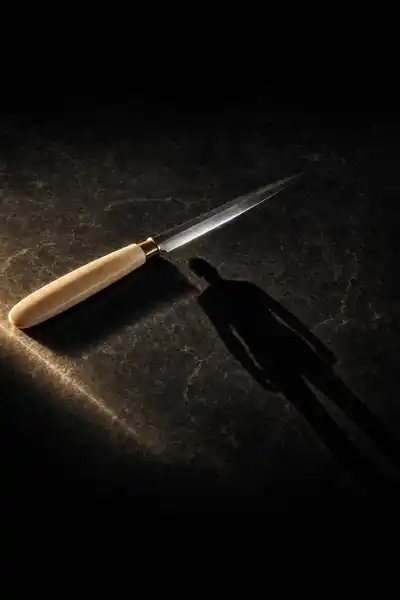
The claim sounds almost too simple. A paper-knife, Sartre liked to say, exists because an artisan first had an idea of it — its purpose came before the object. For centuries we imagined ourselves the same way: made by a craftsman, God or nature, according to a plan that told us in advance what we were for. Sartre's whole move is to remove the craftsman and the plan. We show up first, exist, bump around in the world, and only afterward decide what we are. There is no human nature waiting to be discovered, because there is no one who designed it.
That reversal is not a comforting one, and Sartre never pretended it was. It hands each of us something most of us spend a great deal of energy handing back: total responsibility for who we become, with no alibi from instinct, upbringing, or the will of a god. The essays are an attempt to hold that idea steadily and follow where it leads — into freedom, into anguish, and into the awkward company of other people.
The question we’re asking : If nothing designed us, what exactly makes a human being human?What we’ll see : How a philosophy built in occupied Paris turns the absence of any blueprint into a demanding account of freedom, other people, and the excuses we invent.
Table of contents
01 Chapter 1 — No blueprint, no maker
Sartre begins by dividing the world into two kinds of being, and the whole philosophy hangs on the distinction. There is being-in-itself — the mode of stones, tables, the paper-knife — which is simply what it is, solid, full, identical to itself, with no gap between what it is and what it might be. And there is being-for-itself, which is consciousness, and which is precisely not identical to itself. A stone does not ask what it is. A person does nothing but. That question, opening a permanent distance between us and what we are, is where everything human starts.
The old picture had consciousness working like the artisan's idea of the knife. Essence — the plan, the purpose, the definition — came first; the individual thing came second, made to match. Sartre's famous formula flips the order: existence precedes essence. We exist before we are anything in particular. A person is, at the outset, nothing definable — not cowardly, not generous, not lazy — and becomes those things only through what they do. There is no inner blade shape waiting to be discovered under the surface.

02 Chapter 2 — Condemned to be free
From the empty essence Sartre draws a conclusion that startled his audiences: we are, in his phrase, condemned to be free. Condemned, because we did not choose to exist and cannot resign from the burden; free, because once thrown into the world we are responsible for everything we make of it. There is no situation, he argues, in which we are not choosing. Even refusing to choose is a choice. Even the soldier who obeys has decided to obey rather than desert or die. Freedom here is not a pleasant liberty; it is a sentence with no time off.
This freedom is total in a specific sense. Sartre does not deny that we are born into circumstances — a body, a class, a country, a language none of us picked. He calls this our facticity. But circumstances never dictate their own meaning. The crag on a hiking path is an obstacle to the person who wants to pass and a lookout to the person who wants a view; the situation acquires its sense only through the project we bring to it. We are not free to change every fact, but we are always free in how we take up the facts, and that is the freedom that counts.
03 Chapter 3 — The look, and the trouble with other people
Sartre's philosophy could sound solitary — a lone consciousness inventing itself in a void — but he devotes some of his most vivid pages to the moment another person enters. Picture someone, he writes, crouched at a keyhole, absorbed in what is on the other side of the door. In that instant there is no self-consciousness at all, only the scene watched. Then footsteps in the hall. Suddenly I am seen. And with the other's look, something new is born: I become an object in someone else's world, pinned by a gaze that judges me — the peeping figure at the keyhole, fixed with a quality I cannot see from inside myself.
This is the famous analysis of the look. Before the other appears, I am a free consciousness at the center of my world, organizing everything around my project. Under the other's gaze, I discover a version of myself I do not author: I have an outside, a nature-for-others, and I cannot fully control it. Shame, Sartre argues, is the immediate proof that other minds exist — I feel shame before someone, and the feeling requires no proof, no inference. The other is not a hypothesis I reason my way to; the other is the one whose look catches me and hands me back to myself as a thing.
04 Chapter 4 — Bad faith and the excuses we prefer
If freedom is total and anguish is its price, the obvious human move is to escape it — and Sartre gives that escape a name he made permanent: bad faith. Bad faith is the lie we tell ourselves, the attempt to flee the freedom we cannot actually shed by pretending we are things rather than free consciousnesses. His portraits are exact. The café waiter who performs the role of waiter a little too perfectly, all crisp gestures and eager balance, is trying to coincide with a function, to be a waiter the way a stone is a stone — as if the role could absorb the freedom underneath it.
The trick of bad faith, Sartre shows, is that it plays both sides of what we are. I am, at once, a facticity — a body, a past, a set of circumstances — and a transcendence, a freedom that surpasses all of it. Bad faith freezes one half and hides the other. I am 'just shy,' 'not a maths person,' 'the kind of man who,' as though these were fixed properties like weight, when in truth they are patterns I keep choosing. Or I disown my past entirely, pretending yesterday's promise has nothing to do with the person standing here now. Both are ways of misrepresenting the odd, doubled being that consciousness is.
05 Conclusion
Sartre stood in that Paris room in 1945 to answer the charge that existentialism was a counsel of despair, and his defense was almost the opposite. A philosophy that hands us total responsibility, he argued, is not gloomy; it is the only one that takes human dignity seriously, because it refuses to treat us as the product of a nature we never chose. The paper-knife has its essence handed to it. We do not. Everything difficult in the essays — the anguish, the look, the bad faith — follows from that single refusal to give us a maker and a plan.
Related books