Economism
The economics we're taught wrong
Description
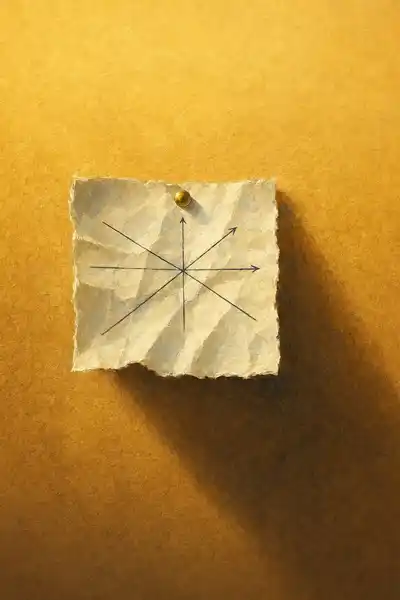
Somewhere around the second week of an introductory economics course, a professor draws two lines on a board. One slopes down, one slopes up, they cross in the middle, and that crossing point is where the price should sit. Supply meets demand. The market clears. It is one of the most persuasive images in all of higher education, partly because it is so clean, and partly because it arrives before anyone has learned enough to push back on it. In his 2017 book Economism, the legal scholar and former businessman James Kwak takes that diagram seriously as an object — not because it is wrong, but because of what people do with it long after they leave the classroom.
Kwak's argument is not that economics is a fraud. He was trained at Berkeley and Yale, ran a software company, and reads the discipline with respect. His target is narrower and stranger: the way the simplest version of the theory — the one that fits on a napkin — escapes the lecture hall and takes on a second life in op-eds, campaign speeches, and cable panels, where it is used to end conversations rather than start them. He gives this reflex a name. Economism is the belief that a handful of first-week supply-and-demand lessons are enough to explain the whole economy, and to settle what we ought to do about it.
The trick, as he tells it, is that the model feels like common sense once it has been internalized. Raise the price of something and people buy less of it — who could argue? But the same reasoning that seems obvious for apples gets quietly extended to wages, health insurance, and financial regulation, where the assumptions holding the diagram together stop describing anything real. Following how that slide happens, and where it came from, is what the book is about.
The question we’re asking : How did a beginner's diagram become a way of settling arguments about how society should work?What we’ll see : A tour through the seductive simplicity of Econ 101, the money and history that spread it, and what gets lost when a teaching tool becomes a creed.
Table of contents
01Chapter 1 — The first diagram we ever trust
Kwak begins where most of us began: with the crossing lines. The demand curve slopes down because people buy less as prices rise; the supply curve slopes up because sellers offer more when prices are high. Where they meet is the equilibrium, the price that leaves no willing buyer or seller stranded. It is genuinely elegant, and for a large range of ordinary goods it captures something true. The problem is not the picture itself but the confidence it hands to whoever has seen it.
What makes the diagram so sticky, Kwak argues, is that it converts a moral question into an apparently technical one. Instead of asking whether a given outcome is fair, we get to ask only whether it is efficient — whether the market has cleared. And the model comes with a built-in verdict: interfere with the equilibrium price and you create waste, a wedge, a deadweight loss shaded in on the graph. The intervention doesn't just fail to help; it visibly destroys value. Few political arguments can survive being drawn as a shaded triangle of pure loss.

02Chapter 2 — Where the diagram came from
A worldview this widespread did not spread by accident, and Kwak devotes a good part of the book to the machinery that pushed it. The intellectual roots run back to thinkers like Milton Friedman and Friedrich Hayek, who in the middle of the twentieth century made the case that free markets were not only efficient but a bulwark of freedom itself. Friedman in particular had a rare gift for translation, turning technical arguments into plain, confident prose and, later, into a television series that reached millions.
What turned a school of thought into a movement, in Kwak's account, was money and organization. Beginning in the 1970s, business leaders and conservative donors funded an infrastructure designed to move these ideas from seminar rooms into the mainstream: think tanks, endowed professorships, legal seminars for judges, and stacks of accessible material for journalists and students. He points to efforts like the founding of the Cato Institute and the funding behind the Heritage Foundation, and to programs that walked federal judges through free-market economics between court terms.
03Chapter 3 — The minimum wage, run through the machine
To show economism at work, Kwak returns again and again to the minimum wage, which he treats as its purest case. Run it through the first-week model and the answer is immediate and grim. A wage is the price of labor. Force that price above where supply meets demand and, just like any price floor, you get a surplus of the thing being sold — in this case, workers no one will hire. The diagram predicts unemployment, drawn as neatly as the deadweight-loss triangle beside it. For decades this was recited as though it were arithmetic.
The trouble is that the labor market does not much resemble the tidy market on the board. Employers often have real power to set wages; workers cannot costlessly shop themselves around; information is uneven; and a raise can change how hard people work and how long they stay. Once those frictions enter, the confident prediction dissolves. Kwak leans on the famous study by David Card and Alan Krueger, who in the early 1990s compared fast-food employment across the New Jersey–Pennsylvania border after New Jersey raised its minimum wage — and found no drop in jobs, and by some measures a rise.
04Chapter 4 — When a teaching aid becomes a worldview
Step back from the minimum wage and the deeper claim of Economism comes into focus. Kwak's target was never a single bad policy prediction; it is the way a pedagogical simplification, meant to get beginners started, hardens into a full account of how society should be arranged. A diagram designed to introduce an idea ends up being mistaken for the idea's final word. The scaffolding is left standing after the building is done.
What makes this powerful, in his telling, is that economism poses as the opposite of ideology. It presents itself as sober description, the grown-up in the room, above the fray of values and interests. But a theory that says markets naturally produce the right outcomes and that intervention destroys value is not neutral — it carries a politics inside it, one that happens to favor those who already do well under existing arrangements. The genius is that this politics never has to announce itself; it arrives disguised as economics.
05Conclusion
The two lines are still on the board, and Kwak does not want them erased. They remain one of the better tools we have for thinking clearly about why prices move and how people respond to incentives. His quarrel is with the moment the diagram walks out of the classroom and starts issuing verdicts it was never equipped to give — on wages, on health care, on the rules that govern finance — as though a beginner's model could stand in for a hard look at how any of those things actually work.
Related books