Don't Bite the Hook
Feeling the pull without acting on it
Description
Picture a perfectly ordinary Tuesday. The printer jams for the third time, an email lands with a tone you don't like, someone cuts the line at the coffee shop, a partner says something that, on another day, you'd have let slide. And something tightens. A small heat rises in the chest, the jaw sets, and a familiar voice inside starts building its case. Within seconds we've said the sharp thing, sent the reply, slammed the cupboard — and then spent the next hour feeling worse, replaying it, defending it to ourselves. None of it required a real catastrophe. Life simply poked us, and we bit.
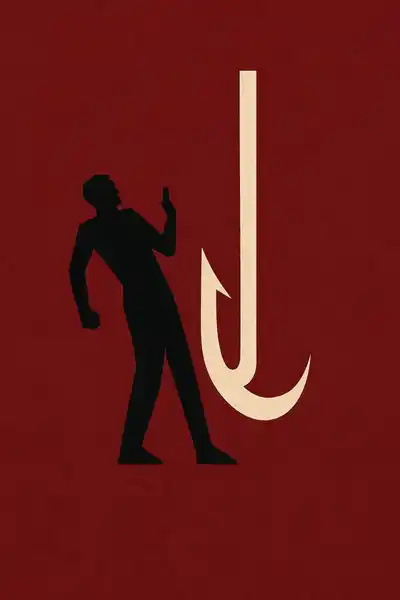
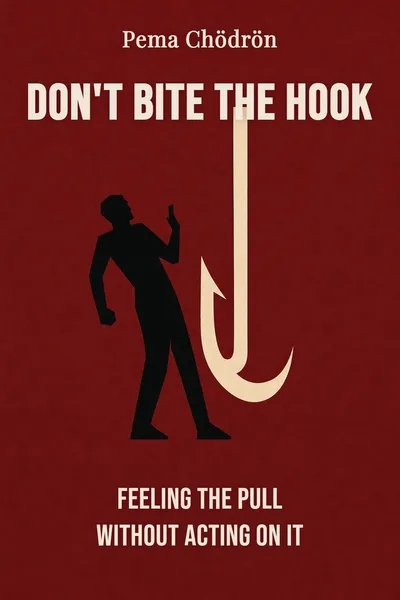
This is the territory the Buddhist teacher Pema Chödrön maps in Don't Bite the Hook, a set of teachings she gave at a weekend retreat and later released as a recording. Chödrön, an American-born nun in the Tibetan tradition and a longtime resident of Gampo Abbey in Nova Scotia, takes her cue from an eighth-century text, Shantideva's The Way of the Bodhisattva. Her word for the moment of being provoked is shenpa — usually translated as attachment, which she renders, more usefully, as getting hooked. The hook is not the event. It's the pull we feel toward our oldest, most automatic reaction.
What makes the teaching land is how small the examples are. Not grief, not betrayal — traffic, a crying child, a slow computer. Chödrön's claim is that these minor irritations are not obstacles to a calm life; they are the exact place where a calmer life is either built or lost. The shocks will keep coming. The question is what we do in the half-second after.
The question we’re asking : When life provokes us, what exactly is the "hook," and is it possible to feel the pull without acting on it?What we’ll see : How Chödrön names the mechanism of getting hooked, what we habitually do to deepen the wound, and what she offers in place of it.
Table of contents
01 Chapter 1 — The hook has a name
Chödrön begins with a Tibetan word most of her listeners have never heard: shenpa. Translators usually reach for attachment, but she finds that too abstract, too spiritual-sounding for what's actually happening. So she reaches instead for something physical. Shenpa is the hook — the tug, the charge, the sudden grabbiness we feel the instant something rubs us the wrong way. It's the moment just before the reaction, when the body has already decided and the mind is rushing to catch up with a reason.
The genius of her framing is that it locates the problem before the story. We tend to argue about whether our anger was justified — whether the person really was rude, whether the email really did have a tone. Chödrön sidesteps that argument entirely. Justified or not, there's a felt experience that comes first: a tightening, a heat, a flicker of I can't stand this. That's shenpa. It's pre-verbal, almost chemical. By the time we've built our case, we're already downstream of it.

02 Chapter 2 — Three things we do to make it worse
Here's the uncomfortable part of Chödrön's teaching: most of our suffering isn't caused by the provocation. It's caused by what we do next. The hook is just the bait. Biting it is a choice — usually an invisible one, made so fast it doesn't feel like a choice at all. And the bite, she observes, tends to take one of a few familiar shapes, each of which feels like relief in the moment and like a deeper trap an hour later.
The first is to attack outward. Someone provokes us, and we strike back — the cutting reply, the raised voice, the door that gets shut a little too hard. It feels powerful, even righteous. We're standing up for ourselves. But Chödrön notes how the relief curdles almost immediately into more shenpa: now we're hooked on the argument, hooked on being right, and the original irritation has multiplied. The second move is to turn the same impulse inward — to bite ourselves. We replay the scene, indict our own stupidity, sink into a familiar groove of self-criticism that feels, strangely, like a kind of comfort because it's so well-worn.
03 Chapter 3 — The space between the urge and the act
If biting the hook is automatic, how do you not do it? Chödrön's answer is disarmingly modest. You don't suppress the feeling, and you don't analyze it into submission. You just learn to stay with it a moment longer than usual. She uses the phrase refraining — not as repression, but as the simple act of feeling the pull and not following it where it wants to go. The hook is there. The body is charged. And instead of acting, you pause, and you let the urge be an urge.
This is harder than it sounds and easier than most people fear. The discomfort of shenpa is real, but it's also, she insists, survivable — and it passes. Sensations don't last. The heat in the chest, the itch to reply, the grabbiness: left alone, unfed, they rise and then they subside, usually faster than we'd expect. What keeps them alive is the biting. Refrain from the bite, and the whole system quiets on its own. Chödrön borrows the image of a fire that goes out when you stop adding logs.
04 Chapter 4 — A practice, not a personality trait
Step back from the printer jams and the cold partners, and Chödrön's teaching makes a quietly radical claim about human character. We tend to treat patience as a temperament — some people just have it, some people don't, and the rest of us are stuck being reactive. Don't Bite the Hook rejects that. Equanimity, in her account, isn't a trait you're born with or without. It's a skill, built the way any skill is built: through noticing, repeating, and tolerating the discomfort of getting it wrong many times before getting it slightly less wrong.
That reframing matters because it relocates where the work happens. If calm were a personality, the only honest response to provocation would be resignation — this is just how I am. By treating it as trainable, Chödrön turns every ordinary annoyance into material. The traffic, the rude clerk, the slow computer aren't interruptions of a spiritual life that would be better conducted on a cushion. They are the cushion. The hook arrives most reliably in exactly the unglamorous moments we'd rather skip past, which is why she insists the practice can't be saved for retreats and meditation halls.
05 Conclusion
Chödrön ends more or less where she began — on a Tuesday, with the small stuff. The retreat she gave wasn't about engineering a life without provocation, because no such life exists. The losses and frustrations and crying children keep arriving. What she offers instead is a different relationship to that half-second after the poke: the recognition that the hook and the bite are two separate things, and that the gap between them, however thin, is where a person actually lives.
Related books