

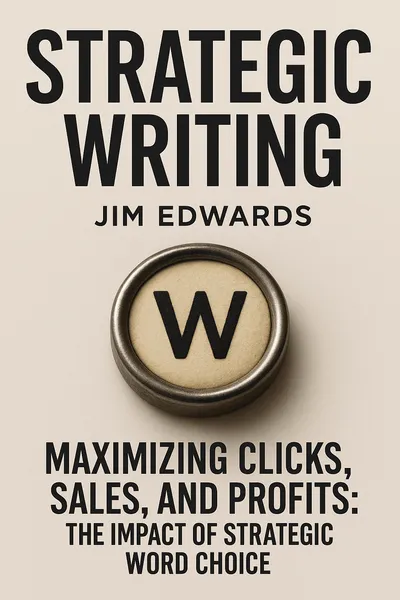
Copywriting secrets
Maximizing clicks, sales, and profits: the impact of strategic word choice
Description
Copywriting is the craft of creating compelling content that prompts readers, viewers, or listeners to act. It's the invisible art of persuasion, where the message is so engaging that its sales intent goes unnoticed. Jim Edwards, a seasoned copywriter, emphasizes that while no one is innately equipped with this skill, the patterns of effective sales copy can be learned and applied.
According to Edwards, mastering these patterns is not only quick but also highly lucrative, as evidenced by his own multi-million dollar sales letters. He defines copywriting as the strategic use of words to persuade and drive specific actions, regardless of the medium or audience.
Table of contents
01Unveiling the mysteries of the copywriting mindset
Copywriting is an essential skill that can significantly impact your business. While outsourcing is an option, understanding the process and being hands-on can lead to more effective results. Learning from your initial attempts, making necessary adjustments, and developing a copywriter's mindset are crucial steps. This involves focusing on the copy you're using, practicing regularly, and paying close attention to the results. Sales copy, in particular, requires constant tweaking based on feedback. It's essential to provide a strong, compelling reason for people to buy your product or service. In practice, there are ten primary reasons why people buy anything, and your sales copy should include multiple reasons from this list. The goal is to be persuasive and provide a solid reason for prospects to buy immediately.
The effectiveness of your copywriting also depends on how well you understand your audience. There are three types of people who will read your sales messages: those who are unaware of a solution to their problem (cold), those who are looking for a solution but don't know about you yet (warm), and those who are familiar with you and the value you offer (hot). Each group requires a different approach, and it's a mistake to think one message will appeal to all. Emotion plays a significant role in purchasing decisions, so it's crucial to make an emotional connection with your prospects. Finally, even if your current approach is profitable, don't stop testing and making improvements. Small, incremental changes can lead to significant increases in profitability. Test everything from headlines and offers to price points and bonuses, and use available tools to automate the process. Remember, there's always room for improvement and potential profits waiting to be unveiled.

02Decoding the secrets of sales formulas letters
To effectively sell a product or service, it's essential to create a sense of need or "thirst" in potential customers. This can be achieved by telling compelling stories that resonate with the audience. There are four types of stories that are particularly effective in this regard: real experiences, case studies, application examples, and myth-dispelling narratives. Each of these stories serves a unique purpose in piquing the interest of potential customers. Real experiences connect on a personal level, case studies provide evidence of success, application examples showcase practical uses, and myth-dispelling narratives address and correct common misconceptions.
Once interest is piqued, the sales copy directs customers on where to quench their thirst. The sales copy can employ one of four strategies to further engage potential buyers. Offering something valuable for free can attract attention and build trust. Explaining the necessity of the product or service demonstrates its importance and relevance. Teaching the steps leading up to the purchase educates the customer and guides them through the buying process. Demonstrating a difficult method before offering a simpler tool highlights the value and efficiency of the product or service. Additionally, providing ample content can further stimulate customer interest by offering more information and engagement opportunities. In the realm of sales, it's widely recognized that customers are more likely to buy from a persona or personality rather than a faceless company. Establishing a strong, consistent persona is crucial for building a connection with potential customers. This can be achieved by taking a firm stance or expressing a strong opinion on a relevant topic. It's beneficial to provoke discussion and even disagreement, as this can engage potential customers more deeply and motivate purchases. If necessary, changing direction and explaining why can also be effective, as customers appreciate transparency and the willingness to adapt.
03Mastering the art of creating desire
To effectively sell a product or service, it's essential to create a sense of need or "thirst" in potential customers. This can be achieved by telling compelling stories that resonate with the audience. There are four types of stories that are particularly effective in this regard: real experiences, case studies, application examples, and myth-dispelling narratives. Each of these stories serves a unique purpose in piquing interest and engaging the audience on a deeper level. Real experiences connect on a personal level, case studies provide evidence of success, application examples showcase practical uses, and myth-dispelling narratives challenge and enlighten the audience.
Once interest is piqued, the sales copy directs customers on where to quench their thirst. There are four strategies that can be employed in sales copy to effectively guide potential customers towards making a purchase. These include offering something valuable for free, explaining the necessity of the product, teaching the steps leading up to the purchase, and demonstrating a difficult method before offering a simpler tool. Additionally, providing ample content can further stimulate customer interest by offering more information and value, thereby increasing the likelihood of a purchase.
04The art of selling without selling
The art of selling without overtly selling is a subtle yet powerful technique that can significantly boost your sales. This approach, inspired by the character Columbo, involves embedding "stealth closes" into your sales copy. The idea is to provide value to the potential customer first, and then subtly introduce a sales pitch with the phrase "By the way...". This method can be applied to any form of content, from articles and blurbs to social media posts and tweets.
For instance, you could share an article that offers valuable insights and then add, "By the way, it's not too late to sign up for my workshop next week." Alternatively, you could provide a quick, 5-minute read that helps drive traffic to a website and then mention, "By the way, if you want to learn some advanced techniques to achieve this, get the details at: __________." This method allows you to close a sale without applying any pressure, making it a brilliant strategy.
05The craft of refining copy
Copywriting is a dynamic field that requires continuous learning and adaptation. It's a blend of art and science, offering endless opportunities for growth. One of the key aspects of copywriting is the use of a hook in your headline. This is a one-sentence story designed to pique curiosity and draw people into your world. For instance, a hook could be: "Rebel real estate agent reveals five secrets to save thousands in sales commissions." The goal is to make people pause and express intrigue.
Another essential tool for copywriters is a "swipe file," a collection of successful advertisements, posters, flyers, and brochures that can be adapted to suit your product or service. Swipe files can be digital or physical, containing screenshots, PDFs, webpages, sales letters, and more. If something catches your eye, add it to your swipe file for future inspiration. The swipe file is a personal collection that should contain anything that grabs your attention, including successful strategies from competitors. It doesn't need to be industry-specific and is a valuable resource for generating ideas and kickstarting your creativity. If you don't have a swipe file, you're at a disadvantage.
Remember, your first draft is just the beginning; the real quality emerges in subsequent versions. Always strive for perfection in your work, as errors in grammar, spelling, and punctuation can undermine its value. Ensure your online messages are compatible with different web browsers and are easily scannable. Consider getting a second opinion to catch any overlooked issues.