Calculus Made Easy
Making calculus actually click
Description
In 1910, an English physicist and engineer named Silvanus P. Thompson published a slim mathematics book under a pseudonym, opening it with an epigraph in old Simian: "What one fool can do, another can." The fool in question was the reader, and the joke was generous rather than cruel. Thompson had spent years watching bright, capable people convince themselves they were too stupid for calculus, when in his view they had simply been taught badly by people who enjoyed making it look hard. His response was a book that promised, on its own cover, to be easy.
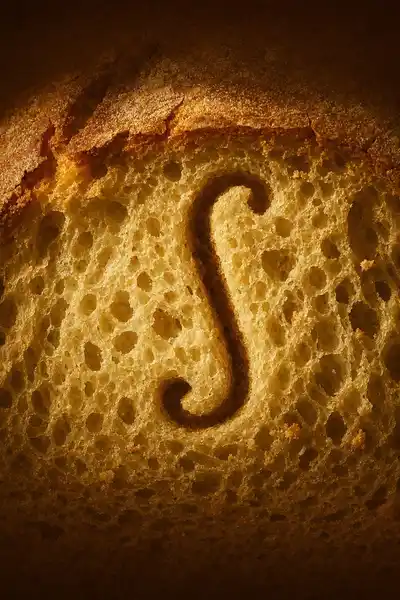
The mathematical establishment was not amused. Calculus was supposed to be a rite of passage, defended by a wall of rigor that kept out the unworthy. Thompson walked straight through the wall. He told readers that the dreadful-looking symbols meant ordinary things, that an integral sign was just a long S for "sum," and that most of the difficulty was stagecraft. The professionals grumbled, and the book sold and sold, going through edition after edition and outliving nearly every austere textbook of its generation.
Thompson built the whole thing around a wager: that the ideas of the calculus are simple, and only the notation and the teaching make them frightening. He wanted a person with no special gift for numbers to finish the book genuinely able to use the tool, not merely to have survived it. Whether that wager pays off is the thing worth watching.
The question we’re asking : Can the calculus really be made easy without being faked, and what does Thompson do to pull it off?What we’ll see : How a defiant little primer takes apart the two great operations of the calculus and hands them to the ordinary reader.
Table of contents
01Chapter 1 — The fool who dared to teach it
Thompson's opening move is psychological before it is mathematical. He knows the reader arrives carrying years of accumulated dread, having been told somewhere along the line that calculus is the province of a gifted few. So the first thing he does is take that dread off the table. The teachers who made it look formidable, he suggests, were often performing their own cleverness rather than helping anyone understand. The subject itself is not the obstacle; the priesthood around it is.
His method throughout is to strip the grandeur from the vocabulary. A term that sounds like an incantation gets translated into the plain thing it actually names. He insists that the reader has nothing to fear from the words "differential" and "integral" once it is clear what small, sensible operations they stand for. The book proceeds like a patient friend who keeps saying, in effect, that is all this means, you already half-knew it.

02Chapter 2 — Two little symbols that scare everyone off
The first great operation Thompson tackles is differentiation, and he refuses to let its symbol intimidate anyone. The notation dx, he explains, simply means a little bit of x, an element of x so small we are interested in how things change as it shrinks toward nothing. The whole expression that frightens students is really asking a homely question: when x changes by a tiny amount, how much does something depending on x change with it?
To make this concrete he leans on the idea of a rate. If you are climbing a hill, the steepness at any point is how much you rise for a small step forward, and differentiation is the machinery for finding that steepness exactly. Thompson keeps returning to such physical pictures because he trusts the reader's intuition about motion, slope and growth more than he trusts abstract definitions. The derivative becomes the answer to how fast, how steep, how quickly.
03Chapter 3 — Adding up the slices
The second great operation is integration, and Thompson introduces it as the natural partner and reverse of the first. Where differentiation breaks a quantity into its tiny rate of change, integration gathers tiny pieces back into a whole. He makes much of the long S in the integral sign, telling the reader it stands for sum, because that is exactly what an integral is: a sum of an immense number of very small contributions.
His favorite way in is area. Imagine a curve, and beneath it a region you want to measure. Slice that region into a great many thin vertical strips, each almost a rectangle, find the area of each tiny strip, and add them all together. As the strips get thinner and more numerous, the rough sum settles onto the true area. Integration is simply the exact result of carrying that slicing to its limit, and Thompson presents it with the confidence that anyone can picture stacking up slices.
04Chapter 4 — The book that refused to grow up
More than a century after it appeared, Calculus Made Easy is still in print, still bought, still pressed on nervous students by people who remember it fondly. That longevity is itself an argument. The serious textbooks of Thompson's era, heavy with rigor and pride, have mostly gone to the archive, while the book that called itself easy and signed off as a fool keeps finding new readers. Something about the wager held.
What it really challenges is the idea that difficulty is a feature of the mathematics rather than a feature of the teaching. Thompson's whole career as an engineer and a popular lecturer had shown him people who could reason perfectly well about real machines and real motion, yet froze at the notation meant to describe exactly those things. His book is an accusation, politely phrased, that the wall around calculus was built by its keepers and not by the subject. Strip the performance away and an ordinary person can walk in.
05Conclusion
Thompson's wager was that the calculus is simple and only its priests make it hard, and the book is the proof he offered. He took the two operations that terrify students, showed that one finds the rate of a tiny change and the other sums up tiny pieces, and tied them together as reverses of a single act. Then he buried the reader in worked cases and exercises until the operations became ordinary. The frightening symbols turned out to mean a little bit of and the sum of, and very little else.
Related books