Brief
The power of strategic silence
Description
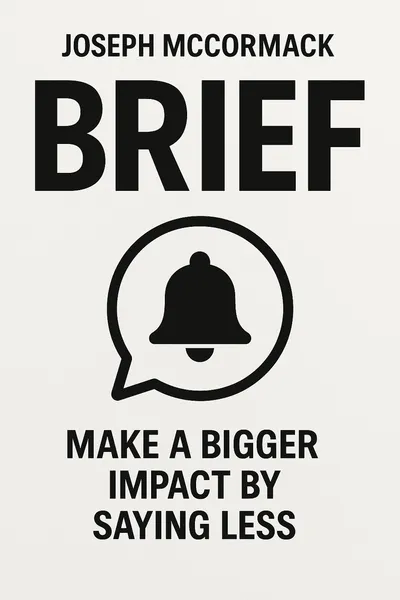
Joseph McCormack is an author and communication expert who specializes in teaching professionals how to communicate more effectively. He is known for advocating brevity in communication, particularly in the business world, where attention spans are short and clear, concise messaging is crucial.
McCormack has written on the subject, including the book "BRIEF: Make a Bigger Impact by Saying Less," which focuses on the importance of being succinct to influence and persuade. His work emphasizes the need for discipline, decisiveness, and awareness to master the art of being brief.
Table of contents
01 Awareness - the importance of brevity in today s world
In today's information-saturated world, people are constantly bombarded with data. This overload can lead to disengagement if the information presented is not concise and compelling. The key to effective communication is to capture your audience's attention before they get distracted. This is a challenge, as most people speak at about 150 words a minute, while the human brain has the capacity to consume around 750 words a minute. This discrepancy, known as "The Elusive 600" effect, can cause listeners to drift off to other thoughts if the speaker does not get to the point quickly. To counter this effect, clarity, conciseness, and compelling content are crucial. The moment you assure someone that your explanation will be brief, their stress levels decrease.

02 Discipline - the art of being brief
Brevity in communication isn't innate; it demands mastery of four practical keys. These include understanding your message, knowing your audience, eliminating unnecessary words, and organizing thoughts logically. When applied diligently, these tools help articulate ideas clearly and concisely. Consistent practice is essential for effectively expressing oneself in a brief yet comprehensive manner. This approach ensures that the core message is conveyed without superfluous details, making it easier for the audience to grasp the intended point.
MAP IT:
The first step to achieving brevity is to prepare an outline for your presentation. This approach offers several benefits: it enhances your preparedness and professionalism, promotes organization and clarity, allows for a comprehensive context, and boosts your confidence. By understanding the interconnections of your ideas instead of presenting them as random thoughts, you can effectively convey the bigger picture without getting lost in the details. This preparation also ensures that you know what you want to say in advance, which further bolsters your confidence.
To ensure brevity, it's recommended to develop a BRIEF map for your presentation. This tool keeps you on track, enabling you to present your ideas succinctly and quickly, preventing your audience from becoming restless. Being prepared allows you to "be brief and then be gone", embodying workplace brevity. As Joseph McCormack puts it, "Brevity is all about preparation and preassembly. When you successfully prepare to deliver these important messages, you are confident that you've already thought through the key information your audience needs. You're giving people a preconstructed message. Professionals mistakenly abandon outlines, but a BRIEF Map is a new visual outlining tool that prepares you to be succinct.”
TELL IT
In today's corporate environment, storytelling stands out as an effective strategy to penetrate the dense jargon often found in business communication. To captivate your audience, it's essential to craft stories that are succinct and focused, resisting the urge to add unnecessary details. Incorporating multimedia, like brief YouTube videos, can enhance your narrative, and humor can be a powerful, engaging element. A compelling story typically features a gripping headline, a clear conflict, identifiable heroes and villains, and a resolution that sticks with the audience. Rather than obscure tales, choose stories that underscore pertinent business challenges, emerging trends, and market shifts.
03 Decisiveness - identifying the right time and place for brevity
In essence, brevity is about identifying those crucial instances where it's vital to communicate the heart of the matter in a succinct and effective manner. It's about honing in on the key points and delivering them in a way that is both efficient and impactful.
Meetings
To enhance productivity in meetings, set strict time limits, potentially reducing a 45-minute meeting to 21 minutes. If time adjustments aren't possible, change the meeting type, like standing meetings, to encourage brevity. Manage dominating participants by assigning an "active listener" or using a "talking stick". Implement a speaker countdown timer for balance. Transform meetings into roundtable discussions for collaboration and ditch PowerPoint slides for straightforward presentations. As Joseph McCormack said, "If you say everything, they will hear nothing."
Social media and email communications
Verne Harnish and Adam Brown emphasize brevity in online communication. Harnish targets C-level executives with concise, relevant messages under 75 words, focusing on attention-grabbing headlines and respect for the reader's time. Brown, a social media pioneer, stresses succinctness in posts, considering the mobile consumption of content. He advocates for brief, engaging content, leaving a small digital footprint for a larger impact. This approach requires disciplined editing, as content should be designed for a 30-second read, avoiding unnecessary verbosity.
Presentations
Effective communication, especially in presentations, hinges on brevity. Military leaders and TED speakers demonstrate that concise messages, distilled into a one-page summary and a few slides, engage audiences more effectively. Joseph McCormack emphasizes the impact of succinctness: "The less you say, the more likely you will be heard." Understanding the audience's background and aligning with their beliefs is crucial. Start with the most pressing issue, clearly define the problem and solution, and respect the audience's time by keeping presentations short and to the point, as advised by George Burns.
Related books