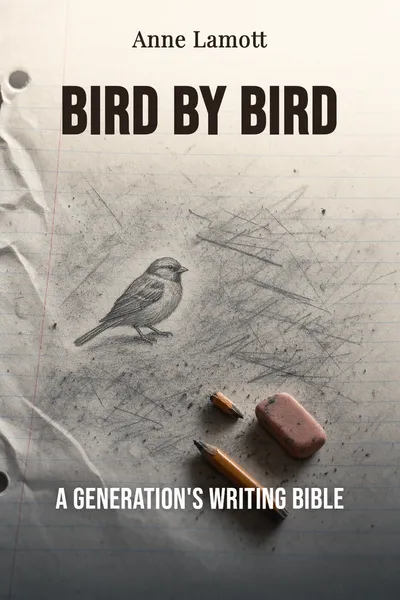
Bird by Bird
A generation's writing bible
Description
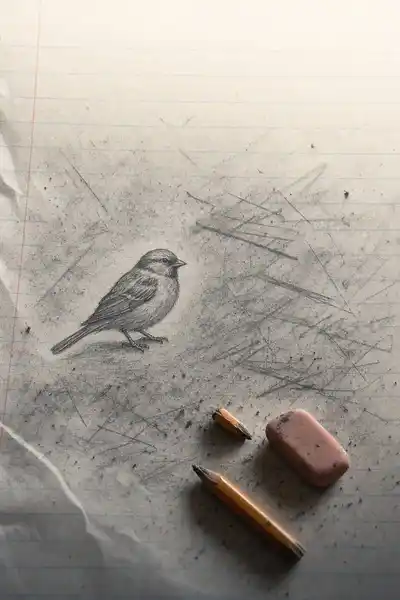
Sometime in the 1970s, in Marin County, California, a ten-year-old boy sat at the kitchen table the night before a school report on birds was due. He had had three months to write it, and he had written nothing. He was near tears, surrounded by binder paper and pencils and unopened books about birds, immobilized by the sheer size of the thing. His father, the writer Kenneth Lamott, sat down beside him, put an arm around his shoulder, and said: "Bird by bird, buddy. Just take it bird by bird."
That boy was Anne Lamott's brother, and decades later she made his rescue the title of a book about how to write—and, as it turns out, about how to live with the impossible feeling of having to do something before you are ready. Published in 1994, Bird by Bird has sold well over a million copies and become a fixture on creative-writing syllabi and bedside tables alike. It is not a manual of grammar or plot mechanics. It is something stranger and warmer: a writer telling the truth about how hard the work is, and why she keeps doing it anyway.
What gives the book its long life is the voice. Lamott is funny in the way of someone who has stopped pretending—about her jealousy of more successful friends, her self-loathing at the keyboard, her conviction that everyone else has it figured out. She doesn't promise a shortcut to a book deal. She promises company. And across thirty years, generations of people who suspected they might have something to say have found in her a friend who already lived through the panic and came out the other side.
The question we’re asking : How does a slim book of writing advice manage to speak so personally to so many people who never publish a word?What we’ll see : How Lamott turns the terror of the blank page into something survivable—and what she thinks the work is really for.
Table of contents
01 Chapter 1 — The brother and the birds
The bird-by-bird anecdote isn't decoration; it's the whole method compressed into one sentence. Lamott's central observation is that most aspiring writers are paralyzed not by lack of talent but by the size of what they're imagining. They picture the finished novel, the glowing reviews, the person they will become, and the gap between that vision and the blank page is so vast that they freeze. Her father's advice to her brother dissolves the paralysis by shrinking the unit of attention. You do not write a book. You write the bird in front of you.
Lamott came to this honestly. Her father was a working writer, and she grew up watching the craft from the inside—not as glamour but as a man going into a room every morning to do something difficult. That early proximity gave her a refusal to romanticize. Writers, in her telling, are not visited by muses. They are anxious people who sit down and stay seated, even when everything in them wants to get up and clean the refrigerator instead.

02 Chapter 2 — Short assignments and shitty first drafts
Two ideas from Bird by Bird have escaped the book and entered the language of writers everywhere. The first is the short assignment. Lamott keeps a one-inch picture frame on her desk to remind herself that all she has to capture in any sitting is what would fit inside it—a single small scene, one moment, the lunch a character ate. The frame is a physical defense against the mind's habit of demanding everything at once. You are not responsible for the day; you are responsible for the inch.
The second, and the more famous, is the shitty first draft. Lamott's claim is that all good writers write terrible first drafts, and that the belief in some other species of writer—the kind who produces clean prose on the first pass—is a delusion that ruins more would-be writers than any lack of ability. The first draft, she says, is the child's draft, where you let it all pour out knowing no one will ever see it. You can't fix what isn't on the page, and you can't get it onto the page if you're editing every sentence as it arrives.
03 Chapter 3 — The radio station of the mind
Sitting down to write means sitting down with your own head, and Lamott is unusually frank about how unpleasant that head can be. She describes a chorus of voices that start up the moment she tries to work—critics, doubters, the people who hurt her, the ones she wants to impress. She gives them a name and an image: a radio station, KFKD, broadcasting self-aggrandizement out of one speaker and savage self-contempt out of the other, simultaneously, at full volume.
The trick is not to silence the station—you can't—but to notice it and turn it down. She suggests imagining each voice as a mouse, picking it up by the tail, and dropping it into a jar. The point of the exercise isn't literal; it's to create just enough distance that the voices stop being the truth and start being noise. A writer who believes the broadcast will never finish anything. A writer who learns to work over the noise can.
04 Chapter 4 — Why anyone bothers at all
For a book ostensibly about getting published, Bird by Bird spends remarkably little energy on it—and that reticence is the heart of what Lamott is really arguing. She is direct that publication does not deliver what people expect. It will not heal you, she says, will not make you feel known or whole, will not quiet the radio station for more than an afternoon. If you are writing in order to be saved by the result, you have aimed at the wrong target, and you will be miserable whether the book sells or not.
So why write? Lamott's answer is that the act of writing is itself the reward. Paying close attention to your life and the lives around you, finding the words for what would otherwise pass unnoticed, is a way of being fully present in a world that mostly rushes by. Writing is how she metabolizes grief, friendship, faith, and the ordinary days that would otherwise dissolve. The page is less a product than a practice—a discipline of noticing that changes the writer regardless of who ever reads it.
05 Conclusion
The boy at the kitchen table eventually finished his report, one bird at a time, because someone sat beside him and made the impossible thing small enough to start. Decades later his sister built a whole book on that gesture, and the gesture is what readers keep coming back for. Bird by Bird does not hand anyone a method for writing a bestseller. It hands them company in the dark, a few practical defenses against panic, and a stubborn insistence that the work is worth doing for its own sake.
Related books