

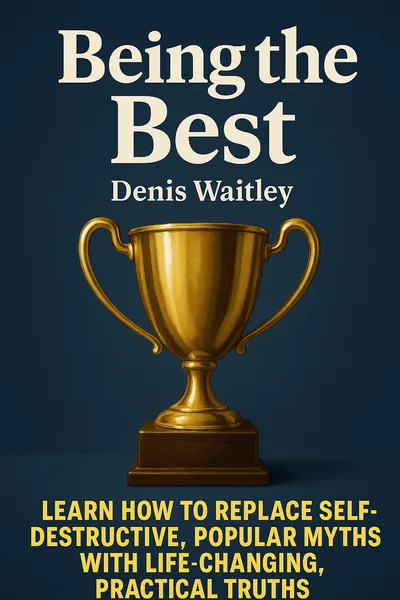
Being the best
Learn how to replace self-destructive, popular myths with life-changing, practical truths
Description
Success in life isn't solely about the achievements one accumulates, but rather the ongoing efforts with the resources at hand. It's a subjective concept, varying significantly from one individual to another. Thus, the journey towards success, filled with happiness and fulfillment, becomes more important than the destination itself. Success is a continuous path rather than a final goal.
True, lasting success comes from within, independent of external comparisons. It's rooted in the joy of accomplishing something exceptional, excellent, and emotionally rewarding. Ultimately, being the best is about consistently delivering your best, striving for excellence, and reaching your highest potential daily.
Table of contents
01Debunking the myths of achievement
Success is not about possessions, production, or comparison. It's a journey of self-improvement and realizing one's potential, not a destination or a collection of material wealth. The modern narrative often equates success with self-gratification, but this overlooks the importance of character traits like truth, morality, and integrity. Instead of adhering to myths that promote a win-at-all-costs attitude or the idea that value must be earned, it's crucial to embrace truths that recognize inherent worth and the benefits of kindness and collaboration.

02Living your truth from within
Appreciating and believing in every individual's inherent worth and freedom is essential. People with low self-esteem often appear ego-driven and self-centered, whereas those with high self-esteem exhibit modesty, contentment, and a propensity to listen more than they speak. Success is fleeting and unpredictable, so it's crucial not to become complacent. Instead of fully embracing achievements, view them as challenges to overcome. Self-esteem varies among individuals, but it can be enhanced through practical steps such as adopting daily enthusiasm, using positive self-talk, thinking uplifting thoughts, and deriving joy from helping others rather than boasting about accomplishments.
03Ethics cannot be faked
Integrity is a steadfast moral code that guides behavior and decision-making, providing a foundation for personal growth and meaningful success. Without it, individuals may compromise their principles for expediency or self-interest, leading to a hollow path defined by fleeting rewards like fame and wealth. True contentment and purpose stem from nurturing one's integrity, which requires self-understanding to define a personal belief system beyond external validation.
People grounded in integrity exude an inner confidence that money can't buy, with their actions aligning with their values across all life aspects. Developing integrity takes time and consistent behavior, with shortcuts only undermining long-term growth. In every significant arena, from relationships to business, integrity drives sustainable achievement.
04Boundless human potential
A common myth suggests that only the talented or lucky can succeed, while another implies we must work within our limitations. However, the truth is that everyone has untapped potential to achieve anything they desire by working smarter and harder at what they enjoy and excel in. Many ordinary people relentlessly pursue excellence in their chosen field, often without media coverage.
Throughout history, numerous individuals have transcended perceived constraints, differentiating limits from limitations - psychological barriers, whether self-imposed or imposed by others. The greatest achievers overcome limitations to beat the odds. We all can become much more than we presently are, if willing to work for it, persevere through setbacks, and pay the price.
05Discover your authentic self
Studies show that most people have 3-5 natural aptitudes that reveal career areas they will excel in. There is also a direct link between vocabulary and success - effective communication and an extensive vocabulary suited to your field helps you thrive. To become your best self and fully utilize your abilities, identify your natural gifts then develop them. Consider your personality type - do you prefer working alone or in groups? Assess your skills in areas like paperwork, creative ideas, visualizing in 3D, logical reasoning, organizing concepts, manual dexterity, using small tools precisely, close observation, recalling complex designs or sounds, distinguishing musical tones or rhythms, differentiating similar sounds, memorizing numbers or number patterns, learning new languages, focusing on distant goals and distinguishing colors. Pinpoint where your strengths lie across this range.
06Follow your own path
Many people spend their lives trying to live up to the expectations of others, often at the expense of their own passions and talents. This can lead to a life where one looks forward to vacations more than career development, daydreams about hidden talents, and sees weekends as an escape from an unfulfilling job. If you find yourself eagerly awaiting quittin' time and lunch breaks instead of being motivated to excel, it may be a sign that you're not engaging with your natural gifts. This disconnection can result in dissatisfaction and unfulfilled potential.
07Progress demands perseverance
Living a fulfilling life often hinges on having clearly defined goals that offer purpose and direction. It's beneficial to write these goals down and visualize them frequently with vivid mental imagery, as if they have already been achieved. Common aspirations like health, wealth, and success are typically seen as goals, but they are actually the results of pursuing a specific purpose. Without clear goals, one is simply indulging in wishful thinking.
Goals must be personalized, reflecting individual desires rather than the expectations of others. To set such goals, start by writing down all possible ambitions. Then, consider the consequences and significance of each, ranking them by importance. Highlight the top three goals and place them somewhere visible, such as on notecards or in a planner, and keep them with you as a constant reminder. These goals should guide daily decisions and influence all actions.
08I control my destiny
A good personal motto to live by is: "Stop stewing and start doing." It's impossible to feel depressed and be active at the same time, so turn motivation into action by taking charge of the present day and making it the best it can be.
Among non-achievers, there are three common personality types: victims, who dwell on the unchangeable past; sustainers, who worry so much about stability that they fear risk; and dreamers, who envision grand plans but never act. Achievers have a different mindset summarized by the phrase "If it is to be, it's up to me." They write their own stories, embracing proactivity and passion. Achievers want to take risks because they know achievement often lies on the other side, while true risk means doing nothing.
09Fuel your journey with passion
The human brain's reticular activating system (RAS) filters information, focusing on what's important and ignoring the rest. It can be programmed to concentrate on positive or negative data, aiding in breaking old habits by substituting them with new ones. Forming a new habit requires extensive practice until it's ingrained in the subconscious, and self-discipline, the cornerstone of high performance. Many talented individuals fail to convert talent into disciplined performance, mistakenly thinking quality can be achieved without discipline.
High achievers often enjoy their work and value excellence. Effective self-discipline involves good time management. Suggestions include having a written self-development plan, starting each day by planning how to best use time to reach goals, learning from successful role models, taking a proactive approach, and using unpleasant tasks to build self-discipline.
10Learning from mistakes
Failure and disappointment are as much a part of life as success and achievement. However, many people overlook the valuable lessons that can be gleaned from their failures. The common misconception is that failure should be avoided at all costs, but this is unrealistic. Failure is a natural part of the learning process. A more intelligent approach is to embark on any new venture with the expectation that failures may occur, and a readiness to use those failures as feedback to fuel progress.
When failure occurs, persist with the mindset of Thomas Edison, viewing it as simply finding another way that doesn't work. Don't equate a lack of success with outright failure - one is temporary, the other implies permanence. Overcome failure through increased learning and action, rather than dwelling on the past. Failure provides an opportunity to innovate - try blending the familiar with something new. Understand what can and cannot be changed in a situation.
11Striving for excellence
Graciousness is a personal attitude that acknowledges our roots and the support we've received. It's the wisdom to recognize that our achievements depend on others' assistance. Daily, it means helping others reach their potential. Many admirable people often go unnoticed as they avoid controversy, living ethically and making history only when in leadership roles. Success doesn't guarantee fulfillment. Executives may attain wealth and status but miss enjoying their achievements. The real richness comes from appreciating the journey, not just the destination.
12Defining your own success
The key to success is not reaching a specific destination or goal, but finding fulfillment and happiness in the journey itself. As Denis Waitley stated, "Success is not the destination; it's a way to travel." Rather than comparing yourself to others, focus on doing something meaningful and worthwhile each day. Anyone who gives their best effort consistently is a success.
Myths about success often leave people feeling empty because they equate success only with material wealth, fame, and status. But real success comes from learning, growing, and sharing each day. It means having land to farm, a job to provide for your family, or good health. Success in America usually focuses outwardly on wealth and recognition, but true happiness lies inward, in the richness of each moment.