

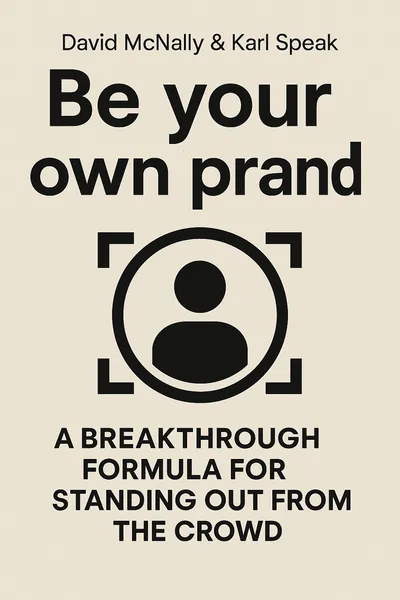
Be your own brand
A breakthrough formula for standing out from the crowd
Description
Building a strong personal brand establishes trust and credibility, allowing you to differentiate yourself and connect more deeply with your target audience.
Define your unique purpose, values, strengths, and passion. Tell memorable stories that convey your brand. Embody your brand consistently across interactions. Communicate on social media, speeches, and other channels. Get influencers to share your brand stories. Align with employers whose brand matches yours.
Managing your personal brand brings professional and personal success.
Table of contents
01What is brand
A business's brand encompasses the sum total of how that business is perceived by all those who interact with it, including customers, investors, employees, the media and more. Branding refers to the process of actively shaping those perceptions through strategic actions like marketing, advertising, public relations and customer service. So a brand is much more than just a business's name, logo or products. Rather, a brand exists in the minds of consumers as a collection of perceptions, emotions and experiences related to that business. Brands hold immense value as strategic assets that directly impact consumer behavior and a company's financial performance. Indeed, the world's strongest brands like Apple, Google and Coca-Cola are worth many billions of dollars.
However, many business leaders struggle to precisely define what a brand represents or articulate why branding should be a priority. In simple terms, a brand can be summarized as: the consistent perceptions, emotions and expectations that exist in the minds of consumers based on their cumulative interactions with an organization and its products/services. Branding is crucial for several key reasons: Firstly, strong brands accrue tremendous financial value that contributes significantly to a company's overall market capitalization. For a globally-iconic brand like Coca-Cola, the value of its branding equates to around half of its total market valuation.
Additionally, branding fosters an emotional connection and relationship of trust between consumers and businesses. If a branded company makes the occasional mistake, loyal customers are more likely to dismiss it as a one-off and continue supporting that business. The more a consumer identifies with a brand, the more forgiveness they will demonstrate.

02Personal brand concepts
Building an enduring personal brand is important for success, just as businesses build strong brands. A strong personal brand reflects inner beliefs and values, strengthening relationships and creating a more fulfilling life. Several interrelated dimensions comprise a robust personal brand framework - competencies, standards, style, platform, and promise.
Competencies refer to qualifications and abilities to fulfill commitments made to others. Before building a brand, establish basic competencies in your field by demonstrating expertise people rely on. Identifying key roles and relationships reveals potential to meet needs through competencies. For instance, competencies may include speaking, writing, advising businesses, fathering children, or supporting a spouse.
Standards represent personal values and preferred ways of operating. Standards attract like-minded people yet remain consistent despite audiences. Flexibility about standards confuses a brand’s personality. Demonstrating competencies consistently backs up claims to possess them.
03Measure personal brand
Measuring interactions with your personal brand involves assessing expectations, experiences, and observations. Expectations are what others anticipate based on your brand promise, experiences are what happens when people interact with you, and observations are what others see and note while dealing with your brand. Brand equity can be calculated as the product of expectations, experiences, and observations. If any of these variables equals zero, the overall brand equity falls to zero, indicating that everything matters in branding.
To ensure the strength of your personal brand, it's important to identify any gaps between the promised and actual experiences. This involves assessing if the reality of interacting with you matches what you pledged. Techniques for gauging how well you deliver on commitments include anecdotal feedback, third-party observations, input from reliable individuals, and assessing the strength of relationships as an indicator of brand promise fulfillment.
04Align personal - company brands
Developing a strong personal brand brings clarity to relationships. When your values and beliefs are clearly defined, people better understand where you stand and what you represent. They learn to respect your values because it's evident those values are important to you. So they won't expect you to compromise those beliefs. Fewer conflicts arise when it's clear to others what you stand for.
Every impression builds your brand, whether made by you or someone else. So make the most of opportunities to showcase your passion and beliefs. If you're in a place where you can't fully commit to living your values, you're fighting the current. Your potential is slipping away as you compromise what you believe in. Ultimately, you must commit to your organization and role, or seek a better fit elsewhere.
The primary benefit of a strong personal brand is getting to be more of your authentic self, not less. You get credit for what you believe as well as what you do. You feel better about life because you're being true to yourself and your values. Renewing your brand daily keeps it vibrant. Make it part of everything you do. Building an enduring brand takes courage and consistency. Clearly define what you believe and stand up for those beliefs despite temptation. Make sure your words, actions and what people experience from you match up every time. That's how to make a positive, lasting impression.
05Live your brand bravely
To prepare yourself for those moments when your brand will be put to the test, keep developing and refining your brand manifesto. Give yourself the time to think about where your personal brand is heading. It’s important that you give yourself credit for what you’ve accomplished so far. Be deliberate about where you want to head in the future. And never leave these important issues to the last minute. That can seriously dilute the quality of attention you give to building your personal brand. Also, be proud of your personal brand. Stand up and be counted for whatever your brand stands for. Make your values an integral part of your character, and project yourself with confidence. If you’re wishy-washy, others will act that way about your personal brand. By contrast, if you move forward with confidence and poise, people will acknowledge you know where you need to be.
In addition, carry out an audit of all your brand promises. Look carefully at everything you promise to deliver. Are those promises consistent with your personal brand? How can you close the distance between where you’d like to be and where you currently are in each of these areas? And bring the feedback of others into this analysis as often as feasible.
Furthermore, be genuine and authentic. Great brands demonstrate what they stand for again and again. You need to do the same. Live your values and make conscious choices which align with those values. Form an emotional bond with those nearest and dearest to you and find ways to grow those bonds. Also, be very careful about the signals you send. People will note both what you say and what you do. Make certain you’re sensitive to the needs of others. Remember, your brand exists only in the minds of those who are close to you. Identify the type of person you want to be and then put everything into fine-tuning the signals you send so they reflect your personal brand.