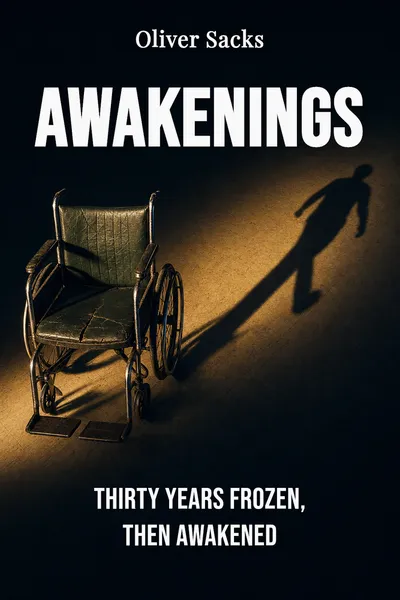
Awakenings
Thirty years frozen, then awakened
Description
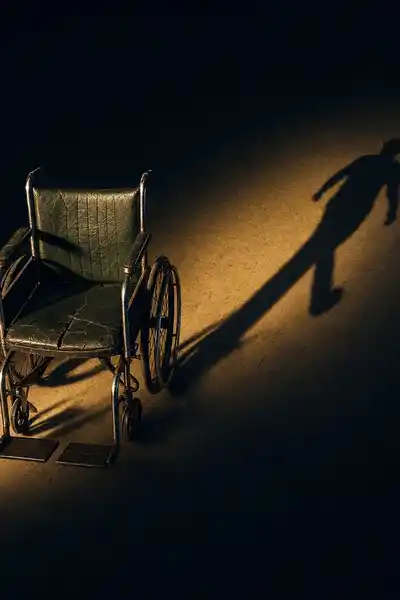
In the summer of 1969, on a chronic ward at a hospital in the Bronx, Oliver Sacks began giving a new drug to a group of patients almost everyone else had written off. Some of them had been sitting in the same postures for thirty years or more. They did not move, did not speak, did not seem to register the room around them. Staff called them the ward's furniture. They had arrived decades earlier with the wreckage of an illness the world had largely forgotten, and they had been parked in a place that expected nothing of them but stillness.
The drug was L-DOPA, then experimental, developed for Parkinson's disease. What happened when Sacks administered it was not the slow, modest improvement anyone had cautiously hoped for. It was closer to a resurrection. Patients who had not spoken in a generation began to talk. A woman who had been motionless since the 1920s stood, walked, laughed, and asked for the world she had lost. And then, for many of them, the miracle turned complicated in ways no one had prepared for — the awakening had a far side.
Sacks wrote all of it down. Awakenings, published in 1973, is his account of those months: the histories, the transformations, the reversals. It reads less like a clinical report than like a set of lives recovered from a long freeze, told by a doctor who refused to see his patients as cases. The book made his name and, later, a film. What it actually contains is stranger and more tender than any summary lets on.
The question we’re asking : What happens to a person who is returned to life after thirty years erased from it?What we’ll see : A forgotten epidemic, a ward of the frozen, a drug that gave time back, and what the whole episode taught a young doctor about what medicine is for.
Table of contents
01 Chapter 1 — The forgotten epidemic
Between roughly 1916 and 1927, a strange sickness moved across the world alongside, and then outlasting, the great influenza of 1918. It was called encephalitis lethargica — sleeping-sickness, though that name flattens how bizarre it was. Some patients slept for weeks and could barely be roused. Others swung the opposite way, into sleeplessness and restless agitation. Millions were affected; roughly a third died in the acute phase. Then, as suddenly as it came, the epidemic faded, and medicine mostly stopped thinking about it.
But the illness was not finished with those it spared. Many survivors seemed to recover, only to be visited years or decades later by a second act. What crept over them looked like an extreme, relentless form of Parkinson's disease — a progressive freezing of movement, speech, and expression. They slowed. They stiffened. They fell into states of profound immobility that could last hours, days, and eventually years. Sacks describes patients who could hold impossible postures indefinitely, who might stand arrested mid-gesture, who lived inside a stillness so complete it was mistaken for absence.

02 Chapter 2 — The statue-people of Mount Carmel
What made Sacks a different kind of doctor was that he refused to treat these patients as a syndrome with legs. He sat with them. He learned their names, their histories, the shapes of the lives that had been interrupted. And slowly he built a picture of what it was actually like to live inside such a condition — not a coma, not a vegetative state, but something for which ordinary language has no word: a conscious person locked out of their own movement.
The patients he describes are unforgettable precisely because he lets them be individuals rather than illustrations. There is Rose R., who fell ill in the 1920s and whose inner clock, Sacks came to believe, had simply stopped in that decade; her sense of the present had never moved on. There is Leonard L., brilliant and articulate in mind but almost entirely unable to act on the world, who communicated by laboriously spelling words on an alphabet board. There is Miron V., and Magda B., and others whose stillness turned out to conceal wit, longing, terror, and a fierce, intact awareness.
03 Chapter 3 — The drug that gave the years back
L-DOPA arrived in the late 1960s as a breakthrough for Parkinson's disease. The reasoning was straightforward: the parkinsonism of these post-encephalitic patients resembled the ordinary kind, so the drug might help. Sacks began cautious trials in 1969. What followed was anything but modest. The word he keeps reaching for is 'awakening' — because that is exactly what it looked like.
Patients who had been mute for decades spoke. Those frozen in place rose and walked. Rose R. returned, in her own vivid conversation, to the 1920s she had never left. Leonard L. described the effect as being reborn, and for a time moved and lived with an ease he had not known since youth. Across the ward there was a burst of animation, appetite, humor, sexuality, and joy — people reclaiming, in a rush, the selves that had been suspended. Sacks calls this first phase the 'awakening' proper, and it reads like the happiest thing he ever witnessed.
04 Chapter 4 — What the awakenings revealed
Step back from the drug charts and the awakening becomes a lesson about what medicine is actually treating. Sacks's insistence, across every page, is that his patients were never their disease. Encephalitis lethargica had done terrible things to their bodies, but the person inside was not the pathology, and could not be reached, helped, or understood by attending to the pathology alone. A chemical could unlock the body; only a relationship could meet the person who walked out.
This is why the book keeps refusing tidy outcomes. L-DOPA was not a switch that turned health on. What Sacks watched, again and again, was a negotiation between a damaged organism and a world it had to re-enter — and the world mattered enormously. Patients did better when they were spoken to, touched, taken outside, given music, given attention. They did worse when isolated on a ward that expected nothing of them. Health, in his account, is not a private possession fixed by a molecule but something that happens between a person and their surroundings, and that a hospital can either nourish or starve.
05 Conclusion
The awakenings did not last in any simple way. The drug that had freed the patients of Mount Carmel proved too volatile to hold them steady, and most drifted into a difficult equilibrium of good hours and bad, of movement and freezing, that Sacks tracked with the same patience he had brought to their stillness. Some declined; some found a fragile accommodation; all of them had, at least, been returned to the current of their own lives, however briefly and however roughly. The last survivors of a forgotten epidemic had been spoken to, and had answered.
Related books