Autobiography of a Yogi
Seeking the master within
Description
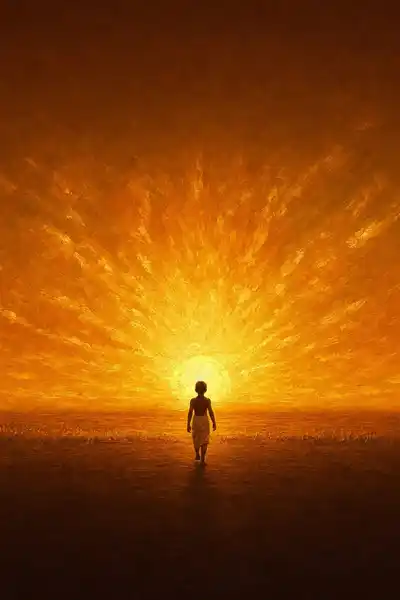
In 1920, a young Indian monk stepped off a ship in Boston to address an international congress of religious liberals. His name was Mukunda Lal Ghosh, though the world would come to know him as Paramhansa Yogananda. He had almost no money, a single robe, and a conviction that the meditation techniques of India were not folklore but a kind of practical science. He was twenty-seven. He would spend the next three decades in America, teaching, founding a fellowship in Los Angeles, and eventually sitting down to write the story of how he got there.
That book, Autobiography of a Yogi, appeared in 1946. It was not a treatise or a set of instructions. It was a life told from the inside — a childhood in Bengal, a restless search for a teacher, encounters with holy men who seemed to bend the ordinary rules of matter and time, and a long apprenticeship under a guru named Sri Yukteswar. For a great many Western readers, it was the first time yoga meant something other than physical postures, and the first time meditation was described not as exotic ritual but as a repeatable inner method.
What makes the book unusual is the seriousness with which it treats experience it cannot prove. Yogananda writes about levitating saints and answered prayers with the same steady tone he uses to describe train timetables and university exams. He met scientists as readily as sages. The opera singer Amelita Galli-Curci, who studied his teachings for twenty years, called it a blend of true stories and superphysical information — Eastern spiritual efficiency set beside Western material efficiency. That pairing is the whole book in miniature.
The question we’re asking : How does a man tell the story of an invisible search — the hunt for a spiritual master — and make it read like reported fact rather than confession?What we’ll see : The making of a seeker, the teachers who shaped him, the encounters where mysticism met the laboratory, and why the form of the book itself carried yoga west.
Table of contents
01 Chapter 1 — A boy who kept running away toward God
Yogananda was born Mukunda Lal Ghosh in 1893, in Gorakhpur, into a comfortable Bengali family. His father was a railway executive, methodical and devout; his mother was warm and died when Mukunda was still a boy, a loss the book treats as an early crack through which longing entered. From his earliest chapters, the child in this story is not a mystic in training so much as a boy possessed by an unreasonable homesickness for something he cannot name. He recalls memories he claims predate his birth, and a certainty, even as a small child, that the ordinary world was not the whole of it.
The recurring motif of his boyhood is flight. He runs away, again and again, toward the Himalayas, toward reported saints, toward anyone rumored to hold the thing he is missing. He is usually retrieved and returned to school. The book does not present these escapes as rebellion; it presents them as a compass needle swinging toward a pole the boy cannot yet locate. His father, patient and exasperated in equal measure, keeps funding an education his son keeps abandoning for pilgrimages.

02 Chapter 2 — The masters, the miracles, and the man who taught the method
The teacher was Swami Sri Yukteswar, and the long central section of the book is essentially a portrait of him. Sri Yukteswar is not soft. He is exacting, sometimes sharp, unwilling to flatter his students, and Yogananda describes years of living under that discipline with unusual honesty about how much it cost him. The relationship is the book's emotional core: a young man who wanted a saint and got a demanding, clear-eyed teacher who cared more about his growth than his comfort. What the guru offers is not consolation but method.
That method has a lineage. Sri Yukteswar's own teacher was Lahiri Mahasaya, a Benares householder who taught while holding an ordinary job, and behind him stands the almost mythic figure of Babaji, a master said to have kept the same body across centuries in the Himalayas. Through this lineage comes Kriya Yoga, the meditation technique that sits at the heart of Yogananda's teaching. He presents it plainly as a technique — a way of working with breath and attention that accelerates inner development, something you practice rather than merely believe.
03 Chapter 3 — When a monk sat down with the scientists
One of the quiet surprises of the book is how many laboratories and lecture halls it passes through. Yogananda was not content to keep company only with hermits. He sought out scientists with the same appetite he brought to saints, convinced that the deepest Indian teaching and the newest Western research were describing one reality from two directions. The pairing that Galli-Curci noticed — Eastern spiritual efficiency beside Western material efficiency — is not a slogan Yogananda arrived at late. It is how he moved through the world.
He devotes admiring pages to Jagadis Chandra Bose, the Bengali physicist and plant researcher whose instruments, Yogananda writes, registered responses in plants and even metals that hinted at a continuity of life running through all matter. Here was a man in a laboratory, with meters and charts, gesturing toward the same unity the yogis spoke of from their meditation seats. For Yogananda this was not coincidence but confirmation: the mystic and the physicist were, du fond, colleagues.
04 Chapter 4 — A life told as a map, not a monument
Most autobiographies are monuments — a life arranged to show its author's significance. Yogananda's works differently, and the difference is what gave it reach. He is rarely the point of his own book. He is a traveler, a witness, a note-taker; the point is always the thing he is traveling toward, and the teachers who help him get closer. The self here is not a destination to be admired but a vehicle to be used. That decentering is unusual, and it is precisely what lets a reader climb into the story rather than merely watch it.
What Yogananda produced, in effect, is less a memoir than a map. He documents the terrain of an inner search the way an explorer documents a coastline — here are the landmarks, here is the method, here is what you can expect to find if you go. Because he insists the practice is repeatable, the book quietly invites the reader to become a seeker too. It is a report from the road written for people who might one day walk it, which is a very different thing from a saint's life written to be revered.
05 Conclusion
The monk who arrived in Boston in 1920 with a single robe stayed in America for the rest of his life, founding the Self-Realization Fellowship and teaching until his death in 1952. The autobiography he sat down to write was his way of handing the whole search to strangers — the runaway boy, the demanding guru, the levitating saints, the scientists with their meters, all set down in one even, unhurried voice. He never argued that readers should believe him. He argued that they could find out for themselves.
Related books