Atomic habits
An easy & proven way to build good habits & break bad ones
Description
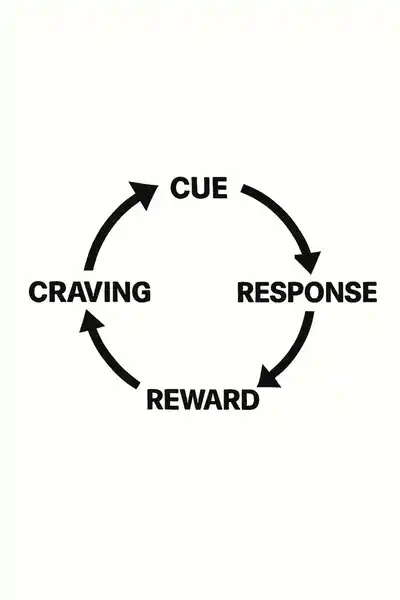
"Atomic habits" suggest focusing on small, incremental changes rather than seeking major breakthroughs. These minor adjustments in daily routines can lead to significant transformations over time. The concept is based on a four-step loop that drives human behavior, leading to the formation of new habits. By understanding and applying four key laws, individuals can enhance their habits, thereby improving their overall systems and achieving their goals.
James Clear emphasizes that difficulties in changing habits stem from ineffective systems rather than personal failure. By refining these systems, one can alter their life trajectory and realize greater achievements.
Table of contents
01 Introduction
Habits, often referred to as the "compound interest" of self-improvement, are the building blocks of all human achievement. Small, consistent improvements in your habits can lead to significant long-term results. This principle was exemplified by Dave Brailsford, the performance director of British Cycling. In 2003, Brailsford committed to a strategy called "the aggregation of marginal gains", which involved seeking tiny margins of improvement in every aspect of cycling. From redesigning bike seats for comfort to using biofeedback sensors for performance monitoring, every potential area for improvement was explored. Even seemingly insignificant changes, like painting the inside of team trucks white to spot dust that could affect bike performance, were implemented. These small changes, though individually minor, accumulated to produce remarkable results. Within five years, the British Cycling team won 60 percent of the gold medals at the 2008 Olympic Games, and set multiple Olympic and world records in the following years.

02 Law #1 – make it obvious
Starting a new habit requires a clear and specific plan, as vagueness can hinder the formation of new habits. The first step is to become aware of your current habits, many of which may have become automatic. To do this, sit down and write out a list of your current habits. Once you have this list, convert it into a scorecard by ranking each habit as positive, negative, or neutral in terms of its value to your life or career. As you create this Habits Scorecard, the goal is not to make immediate changes, but to simply observe your thoughts and actions without judgment or internal criticism.
03 Law #2 – make it attractive
Making a habit attractive can make it irresistible, and building in rewards and temptations can motivate action. This is due to the release of dopamine, a neurotransmitter that not only gives a natural high when we do something we like but also in anticipation of a future reward. This anticipation is what drives us to act, and the more attractive the rewards, the more likely the behavior will become a habit. To form good habits, make the anticipated rewards enticing. One method to make habits more attractive is "temptation bundling", where you link something you want to do with something you don't want to do, ensuring the latter happens first. For example, after returning from lunch, you could call three sales leads before checking ESPN, or do ten pushups and ten burpees before checking Facebook. This, combined with habit stacking, can motivate action on your desired new habit.
04 Law #3 – make it easy
Forming a habit is indeed more about repetition than the passage of time. The key is to make the desired behavior progressively more automatic through consistent action. As James Clear states, "One of the most common questions I hear is, “How long does it take to build a new habit?” But what people really should be asking is, “How many does it take to form a new habit?” That is, how many repetitions are required to make a habit automatic?" The frequency of performing the behavior is what truly matters, not whether it's been twenty-one days or three hundred days. Your current habits have been internalized over the course of hundreds, if not thousands, of repetitions. New habits require the same level of frequency. You need to string together enough successful attempts until the behavior is firmly embedded in your mind and you cross the Habit Line.
To make it easier to act on your new habit or habits, there are several strategies you can employ. First, reduce friction by simplifying your habit until it involves the least number of steps feasible. For example, put the tools you will need within easy reach. Second, prime your environment so doing your new habit is easier than not doing it. For instance, leave your mobile phone in another room when you need to focus on an important project. Third, recognize when decisive moments arise, where you make a conscious and deliberate decision to head one way or another. Fourth, apply the "2-Minute Rule", which states "Whenever you start a new habit, it should take less than two minutes to do." Break all your new habits down into two-minute versions and focus on doing that. Lastly, automate your new habits by putting technology to work for you or by using savvy systems. For example, make saving for retirement automatic by using a preset wage deduction.
05 Law #4 – make it satisfying
Establishing a lasting habit often requires associating it with an immediate reward. This reward, even if small, can significantly enhance your motivation to repeat the behavior. The key is to make the experience enjoyable and satisfying. For example, if you're trying to eat at home more often to lose weight, you could set up a savings account named "Trip to South America". Each time you resist eating out, transfer $50 into this account. This immediate reward not only makes the habit satisfying but also contributes to a long-term goal, making the habit more likely to stick. As productivity expert James Clear states, "The more a habit becomes part of your life, the less you need outside encouragement to follow through. Incentives can start a habit. Identity sustains a habit." Immediate reinforcement helps maintain motivation while waiting for long-term rewards to materialize.
06 Advanced tactics
Habit formation is a continuous journey with no end point. The goal is to consistently seek ways to improve by 1 percent, navigating through the habit loop and identifying bottlenecks. The incremental improvements from these atomic habits can yield significant long-term results. To optimize your ability to form good habits, consider strategies such as leveraging your natural strengths and understanding your genetic predispositions. Apply the "Goldilocks Rule" to maintain motivation, and counteract boredom by setting up variable rewards.
While forming habits can lead to automatic behaviors, this can also be a downside as it may cause you to overlook small errors. Regular reflection and review of your performance can help you stay conscious of your progress over time. Be mindful of the identity you create for yourself through your habits, and ensure it doesn't limit your future growth. Embrace the good aspects of your identity, but also strive for continuous growth and evolution. The power of atomic habits lies in their compounding effect. Tiny changes can lead to remarkable results. Success is not a destination, but an ongoing process of refinement and improvement. It's not about reaching a goal or crossing a finish line, but about improving your system for change.
Related books