All Marketers are Liars
The stories we choose to believe
Description
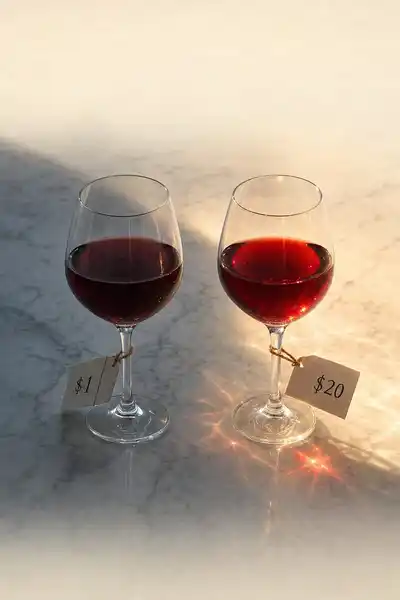
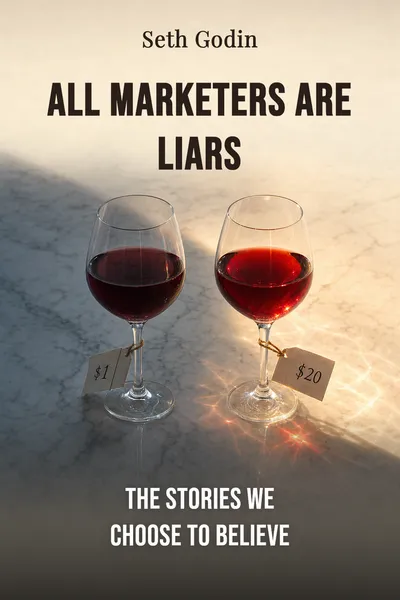
Pour two glasses of the same wine. Tell someone one costs a dollar and the other twenty, and something strange happens — they taste better on the expensive one. Not because they're lying to be polite, but because their brain genuinely registers more pleasure. Researchers at Stanford and Caltech ran a version of this in 2007, watching the reward centers of subjects' brains light up harder for wine they'd been told was pricier. Same wine, different price tag, different experience. The story changed what the tongue reported. This is where Seth Godin plants his flag in All Marketers Are Liars, published in 2005: the wine really does taste better, and that's the whole point.
Godin had already made his name with Permission Marketing and Purple Cow, arguing that the old interruption-based advertising was dying. With this book he pushed further into uncomfortable territory. His claim is that great marketers don't sell products or features or benefits. They tell stories — and we buy the stories, then wrap the product around them. An $80,000 Porsche and a $36,000 Volkswagen can share an engine and a factory, yet one feels like freedom and the other like a commute. The difference lives in our heads, and the marketer put it there.
The title is deliberately provocative, and Godin spent years half-regretting it. Later editions carried a subtitle he preferred: the marketers who tell authentic stories win. Because the argument isn't that marketing is fraud. It's subtler, and more implicating, than that. If the story only works when we choose to believe it, then the liar in the room might not be the one we expected.
The question we’re asking : If a product's value lives in the story we tell ourselves about it, who is really doing the lying — and why do we so willingly go along?What we’ll see : How a book that sounds like an accusation turns into a mirror, held up to the person holding the wallet.
Table of contents
01 Chapter 1 — The wine tastes better because it costs more
Godin opens with a wager that offends common sense: the expensive wine genuinely tastes better to the person who knows the price. He isn't being cute. The subjective experience — the actual pleasure on the tongue — shifts with the story attached to it. The $225 sneakers do feel springier underfoot than the $25 pair, even when a lab could barely tell them apart. And the crucial move in the book is that Godin refuses to call this an illusion to be debunked. It is the product working exactly as intended. The story is not decoration bolted onto value. The story is the value.
This reverses how most of us think about buying things. We like to imagine ourselves as rational shoppers who compare specs, read reviews, and pay for measurable quality. Godin's whole point is that measurable quality ran out of road a long time ago. In most categories, the products are good enough and roughly interchangeable. The Porsche and the Volkswagen will both get us to work. So the decision moves somewhere else entirely — to how the object makes us feel about ourselves, which is another way of saying, to the story.

02 Chapter 2 — Facts don't sell, stories do
The old model of marketing was a list. Here are the features, here are the benefits, here is why we're cheaper or faster or stronger. Godin argues that this stopped working somewhere in the late twentieth century, drowned out by sheer noise. We are exposed to thousands of commercial messages a day, and we have grown expert at ignoring almost all of them. Facts, in that environment, are worthless. Nobody has the attention to weigh them. A story, on the other hand, slips past the guard, because a story is how the human mind has always organized the world.
So the successful marketer doesn't argue. They frame. Godin's own examples range widely — a $50 pair of Puma sneakers that outsells a technically superior competitor, bottled water that costs more than gasoline, a hotel that charges a premium for towels folded into swans. In each case the buyer isn't paying for the object. They're paying to live inside a narrative: I am someone with taste, I take care of my body, I deserve a little luxury. The product is just the ticket stub that proves we were there.
03 Chapter 3 — The story has to be a lie we tell ourselves
Here the book's provocative title comes into focus. Godin insists that every marketer tells a lie, in the loose sense that they present a version of reality shaped to be believed rather than to be complete. But the lie only functions when the customer picks it up and finishes telling it — to themselves, and then to others. The marketer starts the sentence. We finish it. That $80,000 Porsche only means freedom because the driver keeps narrating the freedom every time they turn the key.
This is why Godin keeps returning to the idea that we are complicit. The story of the expensive wine, the story of the running shoe, the story of the organic label — none of them survive if we don't want them to. We could taste the wine blind and shrug. We could read the shoe's specs and buy the cheaper pair. Mostly we don't, because the story is doing something for us that the product alone never could. It is confirming who we already believe ourselves to be. The lie flatters, and we are grateful for the flattery.
04 Chapter 4 — When the story breaks, so does the brand
Step back from the wine and the sneakers, and the deeper claim in Godin's book is about us — the people holding the wallet. His argument quietly dismantles the comfortable idea that consumers are victims of manipulation, dupes fooled by clever ads against their better judgment. If the wine only tastes better because we let the story in, then we are not passive at all. We are co-authors. We shop for narratives that let us tell ourselves who we are, and we pay a premium for the ones that fit. The marketer supplies the raw material; we do the construction.
This reframes the whole moral panic around advertising. We tend to talk about marketing as something done to people, a force to be resisted or regulated. Godin's version is less alarming and more unsettling: marketing works because it gives us stories we were already shopping for. The demand for meaning comes first. Nobody needs a watch that tells time better than a phone, yet a watch can carry a story about legacy, or achievement, or the kind of person we hope to be — and we go looking for that story, then find the object to hang it on.
05 Conclusion
Return to the two glasses of wine. The one we were told costs twenty dollars really did taste better, and by now we can see why: we finished the story the price tag started. Godin's book, for all its confrontational title, isn't an exposé of marketing's dark arts. It's a description of how belief and value have quietly traded places. In a world where most products are good enough, what we actually buy is the story that makes one of them ours.
Related books