Acting in Film
Subtlety over projection
Description
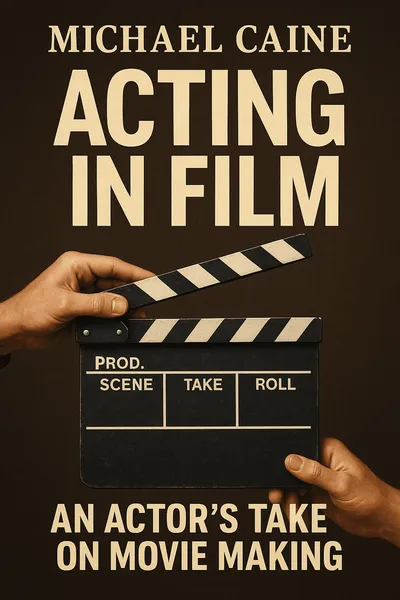
Michael Caine's "Acting in Film" presents a revolutionary thesis that film acting constitutes a distinct artistic discipline requiring specific techniques fundamentally different from stage performance, demanding intimate naturalism rather than projected theatricality. Caine's theoretical intervention emerges from a unique position within contemporary cinema studies, where practitioner-theorists remain scarce. His work addresses a significant lacuna in academic discourse surrounding screen acting methodology, positioning itself against both classical theatrical training paradigms and emerging method acting orthodoxies. The text represents an attempt to codify the empirical knowledge accumulated through decades of professional practice into a systematic pedagogical framework.
The central research question focuses on how film acting differs fundamentally from stage performance in its technical requirements and aesthetic objectives. Caine defends the thesis that screen acting demands a revolutionary approach to performance that privileges subtlety, authenticity, and technical precision over traditional dramatic projection. The main stake involves establishing film acting as an autonomous artistic discipline with its own theoretical foundation and practical methodology. Caine's theoretical contribution lies in his systematic articulation of screen acting as a distinct discipline requiring specific technical competencies. His work successfully challenges the presumption that theatrical training adequately prepares performers for screen work, establishing cinema as requiring its own pedagogical approach. The integration of technical precision with naturalistic performance creates a coherent methodology that acknowledges both the industrial context of film production and the aesthetic demands of screen narrative.
Table of contents
01The Ontology of Screen Performance: Camera as Mediating Force
Caine's theoretical framework rests upon a fundamental ontological distinction between theatrical and cinematic performance modes. His analysis reveals how the mechanical apparatus of cinema—the camera's proximity, the fragmentation of scenes, the possibility of multiple takes—transforms the very nature of acting from a temporal art into a spatial one. The performer must adapt to the camera's mechanical eye, which captures micro-expressions invisible to theater audiences but magnified exponentially on screen.

02The Economics of Cinematic Labor: Performance as Industrial Production
Caine's methodology reveals profound implications for the political economy of cultural production. His emphasis on technical precision and professional reliability reflects the industrial constraints of film production, where time equals money and retakes represent economic loss. The actor becomes not merely an artist but a specialized technician whose efficiency directly impacts production costs.
03The Crisis of Authentic Representation: Manufactured Naturalism
The tension between naturalism and artifice in Caine's system reveals deeper contradictions within contemporary media culture. His advocacy for "truthful" screen performance paradoxically requires extensive technical manipulation—precise eyeline matching, emotional repetition across multiple takes, performance adjustment for different shot sizes. This manufactured authenticity reflects broader anxieties about mediated reality in late capitalist society.
04The Ethics of Performative Truth: Commodified Emotional Labor
The pedagogical implications of Caine's methodology extend beyond professional training to fundamental questions about identity and authenticity in mediated environments. His instruction to "be truthful" while technically manipulating every aspect of performance creates ethical tensions regarding the nature of genuine expression.
05Contemporary Implications and Future Directions
However, the work's strength in practical application masks deeper theoretical limitations regarding the social implications of such performed authenticity and the broader cultural consequences of industrialized emotional labor.
Related books