
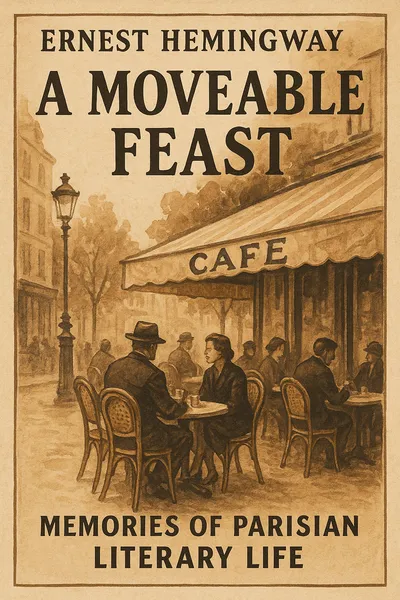
A Moveable Feast
Memories of Parisian literary life
Description
"A Moveable Feast" emerges as Hemingway's posthumously published memoir, completed during his final years and representing a retrospective meditation on his formative period as a writer in 1920s Paris. Written with the temporal distance of several decades, this work constitutes both an autobiographical testament and a literary archaeology of the Lost Generation. Hemingway reconstructs his early years of apprenticeship within the vibrant expatriate community, offering insights into the cultural dynamics that shaped modernist literature. The memoir transcends simple reminiscence to become a theoretical reflection on artistic creation, poverty as creative catalyst, and the mythologization of literary bohemia.
The work's central research question explores how the material conditions and cultural environment of 1920s Paris facilitated the emergence of authentic literary voice and artistic identity. The defended thesis posits that genuine artistic creation emerges from the tension between material scarcity and spiritual abundance, with Paris serving as the geographical and cultural space enabling this transformative synthesis. The main stake demonstrates that artistic authenticity requires both physical displacement from conventional society and acceptance of material precarity as the price of creative freedom.
"A Moveable Feast" transcends conventional memoir to become a theoretical meditation on the conditions necessary for artistic formation. Hemingway demonstrates that authentic creative development requires specific material and cultural configurations: sufficient poverty to maintain focus, adequate community to enable exchange, and appropriate distance from mainstream society to preserve critical perspective. The work argues that genuine artistic identity emerges from dynamic tension between individual vision and collective cultural participation. The memoir's enduring significance lies in its sophisticated treatment of the relationship between biography and aesthetic theory, constructing a model for understanding how social conditions shape artistic possibility while maintaining sensitivity to historical specificity.
Table of contents
01The Paradox of Poverty and Creative Abundance
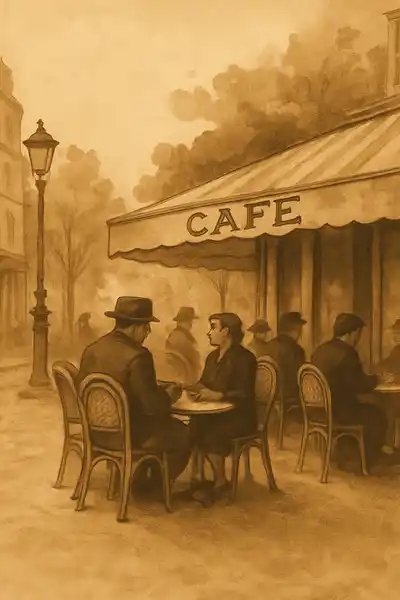
Hemingway constructs a compelling paradox wherein material deprivation functions as the catalyst for artistic enrichment. This dialectical relationship challenges conventional notions of artistic patronage and bourgeois comfort as prerequisites for creative work. The memoir reveals how financial constraints imposed a necessary discipline that crystallized aesthetic choices and forced the elimination of literary excess. The author's description of writing in Parisian cafés while subsisting on minimal resources illustrates how geographical and economic marginality can paradoxically generate cultural centrality.

02Literary Community and the Geography of Influence
The memoir functions as a sophisticated mapping of intellectual networks and creative genealogies within the expatriate community. Hemingway's portraits of literary contemporaries reveal the complex dynamics of influence, competition, and mutual recognition that characterized modernist literary culture. His observations of Joyce, Stein, and Fitzgerald illuminate how artistic communities form through shared aesthetic commitments while remaining fractured by personal ambitions and ideological differences.
03The Ethics of Artistic Representation
The memoir raises profound ethical questions about the writer's relationship to lived experience and other people as raw material for artistic creation. Hemingway's portraits of fellow writers and intimate relationships reveal both affection and exploitation—the inevitable tension between human loyalty and artistic necessity. The work demonstrates how writers must navigate competing obligations to truth-telling, friendship, and aesthetic effectiveness.
04Critical Assessment and Contemporary Relevance
Despite its considerable insights, the memoir exhibits notable limitations in perspective and analysis. Hemingway's retrospective viewpoint inevitably colors his interpretation of events, potentially romanticizing experiences that may have been more complex or troubling than presented. His treatment of gender dynamics within the expatriate community reflects the limitations of his historical moment, often reducing women to supporting roles in male artistic development. Additionally, the work displays insufficient attention to the economic and political contexts that enabled American expatriate privilege—the broader imperial and economic relationships that made such cultural tourism possible.