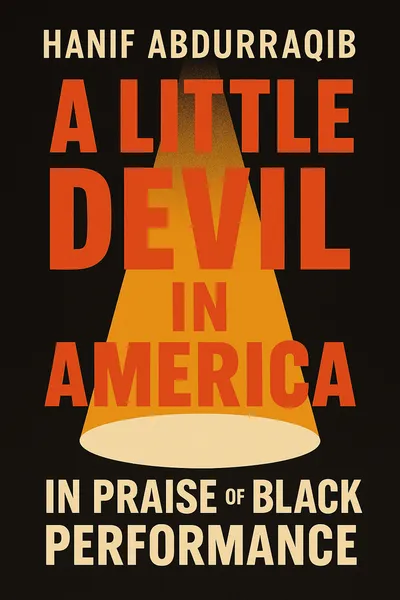
A Little Devil in America
When celebration becomes consumption
Description
Hanif Abdurraqib's "A Little Devil in America" emerges from a critical juncture in American discourse surrounding race, performance, and cultural appropriation. Building upon his established expertise in music criticism and cultural analysis, the author constructs a meditation on how Black performers navigate the treacherous terrain of American entertainment industries. The work positions itself within contemporary debates about cultural extraction, institutional racism, and the commodification of Black creativity, offering a deeply personal yet rigorously analytical examination of performance as both liberation and entrapment.
The central research question driving this work asks: How does American society simultaneously celebrate and consume Black performance while systematically undermining Black humanity and dignity? Abdurraqib defends the thesis that the American entertainment apparatus functions as a mechanism of racial capitalism that extracts value from Black creativity while perpetuating structures of oppression and exclusion. The main stake of this analysis is to expose the contradictory nature of American cultural consumption and its relationship to ongoing racial violence and inequality.
America's relationship with Black performance reveals a fundamental contradiction where the nation simultaneously consumes and destroys Black joy, creativity, and humanity. This work successfully demonstrates how seemingly progressive moments of cultural appreciation often mask deeper structural inequalities, revealing the persistence of racial capitalism within contemporary entertainment industries. The analysis provides crucial insights into how Black performers navigate these complex dynamics, highlighting both the constraints they face and the creative strategies they employ to maintain agency and dignity. Abdurraqib's integration of personal reflection with broader cultural analysis creates a nuanced portrait of American racial dynamics that avoids simplistic condemnation while clearly identifying systemic problems requiring structural solutions.
Table of contents
01 The Economics of Black Performance
Abdurraqib's analysis reveals how American entertainment industries operate through what might be termed extractive appreciation—a process whereby Black artistic innovation becomes divorced from its creators and repackaged for mass consumption. The author demonstrates how this economic model transforms Black cultural expression into commodity while systematically excluding Black communities from the wealth generated by their own creativity. This framework illuminates the structural mechanisms through which American capitalism has historically appropriated Black labor, extending beyond traditional economic exploitation into the realm of cultural production.

02 Performance as Survival Strategy
The work examines how Black performers have historically navigated hostile environments through strategic self-presentation, revealing performance as both artistic expression and survival mechanism. Abdurraqib illustrates how Black entertainers develop sophisticated codes of resistance within systems designed to limit their humanity, using music, dance, and theatrical expression to maintain dignity while satisfying white expectations. This analysis demonstrates the psychological toll of constant performance, where authentic self-expression becomes indistinguishable from strategic self-protection.
03 The Spectacle of Black Suffering
Abdurraqib interrogates how American culture transforms Black pain into entertainment, examining the voyeuristic consumption of Black trauma across multiple media platforms. The analysis reveals how historical and contemporary violence against Black communities becomes aestheticized and commodified, creating what the author terms a marketplace of suffering. This dynamic extends beyond obvious examples of exploitation to encompass seemingly progressive representations that nonetheless reduce Black experience to digestible narratives of struggle and redemption.
04 Reimagining Black Joy and Agency
The final analytical movement explores possibilities for Black artistic expression beyond the confines of white expectation and consumption. Abdurraqib identifies moments where Black performers transcend extractive frameworks, creating spaces of genuine community and celebration that resist commodification. This analysis examines how Black joy functions as both personal healing and political resistance, challenging dominant narratives that center Black experience around trauma and struggle.
05 Critical Assessment and Future Directions
The work's strength lies in its sophisticated analysis of cultural dynamics, yet it occasionally risks reproducing the very spectacularization it critiques by focusing extensively on Black trauma without always providing equal attention to Black agency and resistance. While Abdurraqib's personal positioning enriches the analysis, the work might benefit from greater engagement with Black feminist and queer theoretical frameworks that could complicate some of its conclusions about performance and identity. The analysis would also be strengthened by more explicit consideration of how digital media platforms are transforming these dynamics, particularly regarding how social media creates new forms of both exploitation and resistance.
Related books