

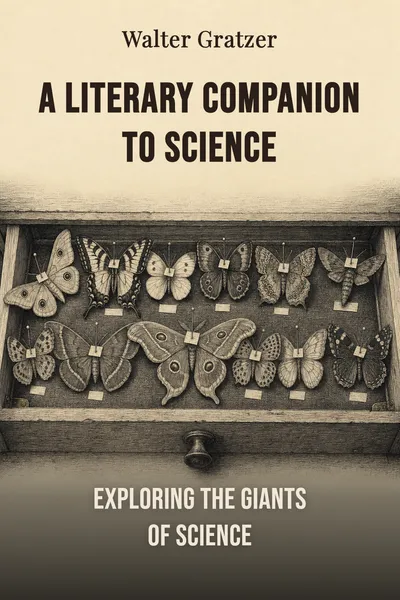
A Literary Companion to Science
Exploring the giants of science
Description
Walter Gratzer's "A Literary Companion to Science" presents a comprehensive anthology that challenges the traditional separation between scientific and humanistic cultures. This collection positions itself within the ongoing dialogue concerning the relationship between empirical investigation and literary expression, drawing upon diverse textual sources spanning centuries of scientific development. The work emerges from contemporary debates about science communication and public understanding, offering a curated exploration of how literary voices have interpreted, celebrated, and critiqued scientific advancement.
The central research question driving this anthology is: How has literature served as both witness to and interpreter of scientific revolution, shaping public perception and cultural integration of scientific knowledge? Gratzer defends the thesis that the intersection of science and literature reveals science as fundamentally cultural practice, whose meaning and significance emerge through narrative construction and literary interpretation. The main stake is to demonstrate that scientific understanding cannot be divorced from its literary representation and cultural contextualization.
Gratzer's anthology successfully demonstrates that science and literature constitute complementary rather than competing modes of understanding. The collection reveals how literary representation has been essential to science's cultural integration, providing narrative frameworks that make technical knowledge accessible and meaningful to broader audiences. The work establishes that scientific understanding emerges not solely through empirical investigation but through ongoing dialogue between technical discovery and cultural interpretation. The anthology's comprehensive scope illustrates how literary voices have consistently served as both champions and critics of scientific progress, mediating between specialist knowledge and popular understanding while raising essential questions about science's social and ethical implications.
Table of contents
01The Literary Construction of Scientific Authority
Gratzer's anthology reveals how literary representation has been instrumental in constructing scientific authority and legitimacy. The selected extracts demonstrate that scientific discoveries gain cultural resonance not merely through empirical validation but through their integration into broader narrative frameworks. Literary accounts of scientific figures transform researchers from technical specialists into cultural heroes or cautionary figures, embedding scientific practice within recognizable human dramas.

02Science as Cultural Transformation Agent
The anthology's breadth demonstrates science's function as a profound cultural transformation agent, with literary responses serving as barometers of social anxiety and aspiration. Gratzer's selections reveal how scientific advancement generates literary responses that range from celebration to profound unease, indicating science's capacity to destabilize existing worldviews while simultaneously promising new forms of understanding and control.
03Tensions Between Empirical and Imaginative Knowledge
The collection exposes fundamental tensions between empirical and imaginative approaches to knowledge, highlighting persistent cultural anxieties about scientific rationality's relationship to human meaning-making. Literary responses to scientific development often reveal deep ambivalence about the consequences of privileging empirical observation over traditional sources of wisdom and understanding.
04Ethical Implications and Social Responsibility
The anthology's scope encompasses literary explorations of science's ethical dimensions, revealing how writers have consistently grappled with questions of scientific responsibility and moral accountability. Literary responses to scientific advancement often serve as early warning systems, identifying potential dangers and unintended consequences before they become manifest in social reality.
05Critical Assessment and Future Directions
While Gratzer's collection admirably demonstrates literature's role in interpreting science, it potentially underemphasizes the ways scientific thinking has reciprocally influenced literary expression and narrative technique. The anthology's focus on literature responding to science may obscure more complex dynamics of mutual influence and co-evolution between these knowledge domains.