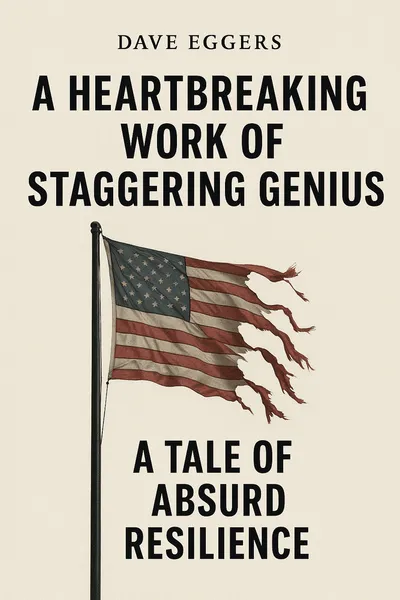
A Heartbreaking Work of Staggering Genius
A tale of absurd resilience
Description
Dave Eggers' debut memoir represents a significant intervention in the landscape of American autobiographical writing at the millennium's turn. Published during a period of intense cultural self-examination, the work emerges from the author's experience of sudden orphanhood and subsequent guardianship of his younger brother. The narrative operates simultaneously as personal testimony and cultural critique, positioning individual trauma within broader questions of generational identity and media saturation. Eggers approaches the memoir form with deliberate self-consciousness, interrogating the very conventions through which personal experience becomes literary commodity.
The central research question driving the work asks: How does one construct authentic narrative identity while acknowledging the inherently performative nature of self-representation? Eggers defends the thesis that genuine selfhood emerges not despite but through the recognition and manipulation of one's own performative impulses when confronted with existential responsibility. The main stake is to demonstrate that authentic engagement with trauma and responsibility requires embracing rather than concealing the artificial constructs through which we understand ourselves.
Eggers constructs a sophisticated argument for embracing rather than transcending the performative dimensions of contemporary selfhood. The work demonstrates that authentic engagement with responsibility and loss requires acknowledgment of the cultural frameworks through which such experiences become meaningful. Rather than seeking some impossible position outside cultural mediation, the memoir advocates for conscious manipulation of available narrative resources toward genuine ends. The intellectual contribution lies in the work's demonstration that postmodern skepticism regarding authentic representation need not preclude genuine emotional and ethical commitment. Eggers shows how critical awareness of one's own performative tendencies can enhance rather than undermine authentic engagement with circumstances demanding genuine response.
Table of contents
01 The Paradox of Performative Authenticity
Eggers establishes a fundamental tension between genuine emotional experience and its inevitable commodification through narrative. The work's theoretical framework draws heavily from postmodern concerns with the authenticity of representation while maintaining investment in the emotional reality of lived experience. This creates a productive contradiction wherein the author simultaneously performs his reluctance to perform, creating what might be termed "meta-authentic" discourse.

02 Generational Responsibility and Cultural Inheritance
The work examines how sudden adult responsibility transforms individual identity within specific cultural and economic contexts. Eggers' assumption of parental duties represents more than personal circumstance; it embodies broader questions about how contemporary subjects inherit and transform cultural legacies. The author demonstrates how extraordinary circumstances reveal the constructed nature of normative adult roles while simultaneously demanding genuine commitment to their performance.
03 Media Culture and Self-Consciousness
The memoir interrogates the relationship between individual experience and broader cultural narratives, particularly regarding how media representations shape personal identity formation. Eggers demonstrates how contemporary subjects inevitably understand themselves through cultural frameworks that precede and exceed their individual circumstances. This creates a condition wherein authentic self-knowledge requires navigation through layers of cultural mediation.
04 Ethics of Narrative Exploitation
The memoir confronts fundamental questions about the ethics of transforming personal trauma into public narrative, particularly when that transformation affects other individuals who did not choose such exposure. Eggers examines how the imperatives of honest self-representation conflict with responsibilities to family members and broader communities. This raises broader questions about the relationship between individual artistic expression and social obligation.
05 Critical Assessment and Future Directions
The work's primary limitation lies in its potential reinforcement of privileged subject positions through its very sophistication. While Eggers acknowledges class advantages, the memoir's formal innovations may inadvertently exclude readers lacking similar cultural capital. Additionally, the work's focus on individual psychology sometimes obscures broader structural analyses of the conditions producing such experiences.
Related books