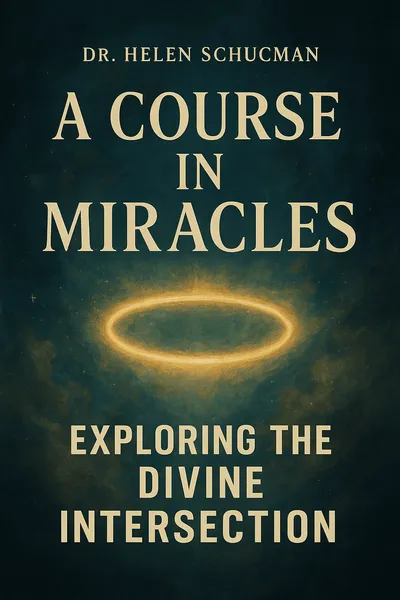
A Course in Miracles
Exploring the divine intersection
Description
A Course in Miracles emerges as a singular phenomenon within contemporary spiritual literature, representing a comprehensive metaphysical system that challenges conventional religious and psychological paradigms. Schucman's unique position as an academically trained psychologist who claimed to receive divine revelation creates an unprecedented fusion of therapeutic methodology and mystical theology. The work positions itself as both a spiritual curriculum and a practical guide for psychological transformation, addressing the fundamental questions of human suffering, reality, and redemption through a distinctly non-traditional Christian framework.
The fundamental thesis of A Course in Miracles asserts that the fundamental reality is love, while the perceived world of separation, conflict, and suffering constitutes an illusory projection of the ego that can be transcended through forgiveness and the recognition of our shared divine nature. This central research question drives the work's comprehensive exploration: How can humanity transcend the illusion of separation and suffering to recognize the fundamental reality of divine love and unity?
The defended thesis maintains that the material world and human suffering are elaborate illusions created by the ego, which can be dissolved through systematic forgiveness and the recognition of our inherent divine nature. The main stake involves providing a complete reorientation of human consciousness from fear-based perception to love-based reality, fundamentally transforming individual and collective human experience. A Course in Miracles presents a comprehensive metaphysical system that seeks to revolutionize human consciousness through the systematic dissolution of ego-based perception. The work's integration of psychological insight and spiritual wisdom creates a unique therapeutic spirituality that addresses both individual suffering and collective illusion. Its central argument that love constitutes the only reality while separation and conflict represent elaborate projections offers a radical reframing of human experience that challenges fundamental assumptions about causality, identity, and purpose.
The Course's intellectual coherence lies in its consistent application of non-dualistic principles across psychological, ethical, and metaphysical domains. However, this consistency also represents its greatest limitation, as the text's systematic idealism struggles to adequately address the concrete realities of social injustice, systemic oppression, and material suffering that characterize human existence.
Table of contents
01 The Ontological Revolution of Illusion
The Course presents a radical ontological framework that inverts traditional Western metaphysics by positing that the material world constitutes an elaborate illusion. This theoretical foundation draws upon both Eastern philosophical traditions of maya and Western idealist philosophy, yet synthesizes them into a unique therapeutic spirituality. The text's conception of reality operates through a binary system where only love represents truth, while everything else—including physical existence, individual identity, and temporal experience—functions as a projection of the separated mind.

02 The Therapeutic Deconstruction of Ego
The Course's analysis of ego-consciousness represents a sophisticated psychological framework that parallels and extends psychoanalytic insights while fundamentally reorienting their ultimate purpose. Rather than strengthening ego-functioning, as traditional psychology aims to do, the Course seeks to dissolve ego-identification entirely. This therapeutic approach identifies the ego as the source of all psychological suffering, positioning it not as a necessary structure for healthy functioning but as an impediment to authentic well-being.
03 The Paradox of Individual Salvation in Universal Context
The Course navigates the complex tension between individual spiritual development and universal truth through its unique interpretation of salvation. While appearing to address individual students, the text simultaneously asserts that there are no separate individuals to be saved, creating a productive paradox that drives its entire pedagogical strategy. This apparent contradiction reveals the Course's sophisticated understanding of the limitations of language and conceptual thinking when addressing transcendent truths.
04 The Ethical Implications of Non-Dualistic Love
The Course's ethical framework emerges from its non-dualistic metaphysics, creating a moral philosophy that transcends traditional categories of right and wrong in favor of truth and illusion. This approach generates profound implications for social responsibility, political engagement, and interpersonal ethics. By positioning love as the only reality and fear as illusion, the text suggests that authentic ethical behavior emerges naturally from accurate perception rather than from imposed moral codes or social conventions.
05 Critical Analysis and Future Directions
The Course's most significant limitation lies in its potential for spiritual bypassing—using transcendent insights to avoid engaging with concrete social and political realities. Its emphasis on forgiveness as recognizing the unreality of offense can inadvertently minimize genuine harm and structural violence. Additionally, the text's individualistic focus on personal transformation may inadequately address collective healing and social transformation.
The work's channeled origins raise questions about authority and interpretation, while its complex theological language may create barriers for practitioners seeking practical guidance. Furthermore, the Course's implicit critique of traditional religious institutions and practices may alienate potential students while failing to acknowledge the genuine wisdom and community support these traditions provide.
Related books