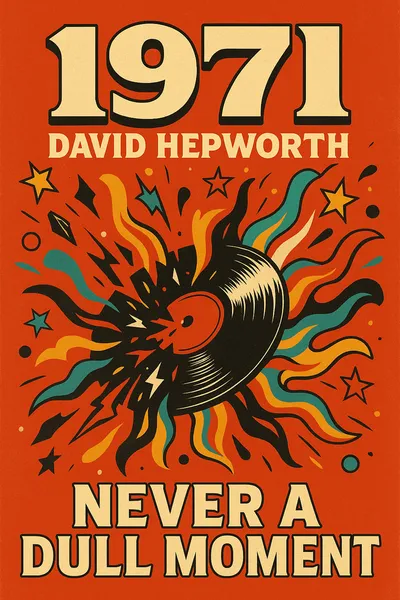
1971
Never A Dull Moment
Description
David Hepworth, leveraging his extensive expertise in music journalism and cultural analysis, presents a compelling examination of a pivotal year in popular culture. The work situates 1971 as a transformative moment when musical innovation, technological advancement, and social upheaval converged to create unprecedented artistic achievements. Hepworth's institutional knowledge and critical acumen enable a nuanced exploration of how this particular temporal moment crystallized broader cultural shifts.
The central research question asks: What unique conditions in 1971 enabled popular music to achieve its apex of creative and cultural influence? Hepworth defends the thesis that 1971 constitutes the zenith of popular music's artistic achievement and societal impact. The main stake involves demonstrating how temporal specificity shapes cultural production and lasting influence.
Hepworth constructs a compelling case for 1971's exceptional status through systematic analysis of convergent factors enabling unprecedented creative achievement. The argument synthesizes artistic, technological, social, and economic dimensions to demonstrate how temporal specificity created optimal conditions for cultural production. The work's intellectual contribution lies in moving beyond simplistic nostalgia to examine structural conditions enabling artistic excellence.
The analytical coherence emerges from Hepworth's integration of multiple explanatory frameworks, avoiding reductive mono-causal explanations. His journalistic background enables concrete illustration of abstract theoretical points, while his critical perspective maintains analytical distance from celebratory impulses.
Table of contents
01 The Convergence of Artistic Maturity and Technological Innovation
Hepworth's analysis reveals how 1971 represented a unique confluence of artistic maturation and technological capability. The period witnessed musicians who had developed sophisticated creative vocabularies while gaining access to advanced recording technologies. This convergence enabled unprecedented experimentation and sonic exploration, transcending previous limitations of both artistic vision and technical execution.

02 Social Upheaval as Creative Catalyst
The analysis extends beyond musical considerations to examine broader social dynamics shaping artistic production. Hepworth positions 1971 within ongoing cultural transformations, including generational conflict, political disillusionment, and evolving social norms. These tensions provided both subject matter and emotional urgency that energized creative output.
03 The Economics of Creative Independence
A crucial analytical axis examines the economic structures enabling artistic freedom during this period. Hepworth illuminates how industry conditions in 1971 provided unusual autonomy for established artists, allowing extended creative processes and experimental approaches. Record companies, experiencing unprecedented profits, granted artists significant latitude in pursuing personal visions.
04 Legacy and Cultural Memory
The final analytical dimension addresses how 1971's achievements shaped subsequent cultural development and collective memory. Hepworth examines the mythologization of this period, analyzing how retrospective narratives have constructed 1971 as a golden age. This cultural memory functions both as inspiration and burden for later generations of artists and critics.
05 Critical Assessment and Future Perspectives
Despite its analytical sophistication, the work exhibits certain limitations. The focus on exceptional achievement may inadvertently marginalize contemporaneous developments that failed to achieve similar recognition. Additionally, the emphasis on English-speaking popular music potentially obscures global musical developments during the same period. The nostalgic framework, while historically justified, risks reinforcing cultural conservatism that devalues contemporary innovation.
Related books