1939: The Lost World of the Fair
A glimpse of tomorrow's promise
Description
Gelernter's exploration of the 1939 New York World's Fair emerges from his dual expertise in technology and cultural analysis, offering a nostalgic meditation on American exceptionalism. The work situates itself within broader debates about progress, community, and national identity, using the fair as a prism through which to examine the transformation of American society. Written during the 1990s cultural wars, the book reflects conservative anxieties about social fragmentation and technological displacement.
The central research question asks: How did the 1939 World's Fair embody a uniquely American vision of progress that subsequent generations have abandoned? Gelernter defends the thesis that the fair represented the culmination of a coherent American worldview combining technological optimism, social harmony, and democratic ideals that was irretrievably lost after World War II. The main stake is to demonstrate that contemporary America has sacrificed communal purpose and unified vision for individualistic fragmentation and cultural relativism.
Gelernter constructs a coherent narrative linking architectural design, technological optimism, cultural authority, and civic religion to argue that the 1939 fair represented a unique historical moment of American unity and purpose. His analysis demonstrates how seemingly disparate elements combined to create a compelling vision of democratic progress that subsequent generations have been unable to recreate or replace. The work's intellectual contribution lies in connecting aesthetic and cultural analysis to broader questions about democratic governance and social cohesion.
Table of contents
01 The Architecture of Democratic Optimism
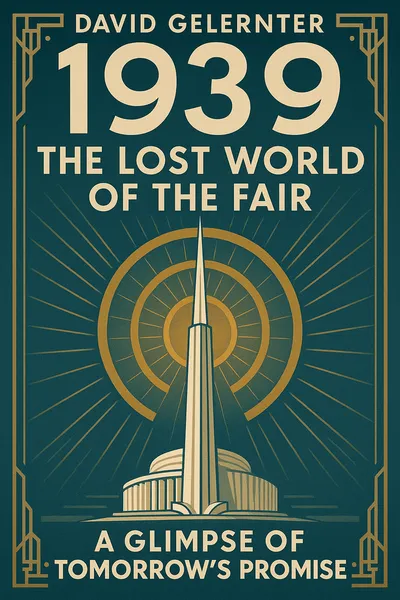
Gelernter's analysis reveals how the fair's physical design embodied democratic principles through accessible modernism and inclusive spaces. The Trylon and Perisphere symbolized technological transcendence while maintaining human scale, contrasting sharply with postwar architectural brutalism. This spatial organization reflected broader social assumptions about progress serving collective welfare rather than elite interests.

02 Technological Utopianism and Social Cohesion
The fair's technological exhibits projected a future where scientific advancement would strengthen rather than fragment social bonds. Gelernter examines how displays of automation, television, and consumer goods were presented as tools for democratic participation rather than social stratification. This technological optimism assumed shared values and common purposes, contrasting with contemporary debates about digital divides and technological alienation.
03 Cultural Authority and Moral Consensus
Gelernter identifies the fair as representing a moment of cultural confidence when American institutions commanded broad public respect and moral authority. The exhibits assumed shared standards of beauty, progress, and social organization that transcended ethnic and regional differences. This cultural consensus enabled the fair's optimistic projections about American leadership and democratic values.
04 The Collapse of Civic Religion
The fair functioned as a form of civic religion, celebrating American democracy with quasi-spiritual reverence while maintaining secular accessibility. Gelernter argues that this civic dimension provided meaning and purpose that purely individualistic philosophies cannot replicate. The author suggests that postwar emphasis on personal fulfillment and cultural diversity has eroded the communal bonds that sustained democratic institutions.
05 Critical Perspective and Contemporary Relevance
Gelernter's analysis suffers from selective historical memory that romanticizes the exclusions and inequalities underlying the fair's apparent unity. His critique of postwar developments overlooks the democratic gains achieved through civil rights movements and expanded participation. The work's conservative framework prevents serious engagement with how the fair's vision excluded women, minorities, and dissenting voices. The author's technological determinism oversimplifies complex relationships between innovation and social change.
Related books