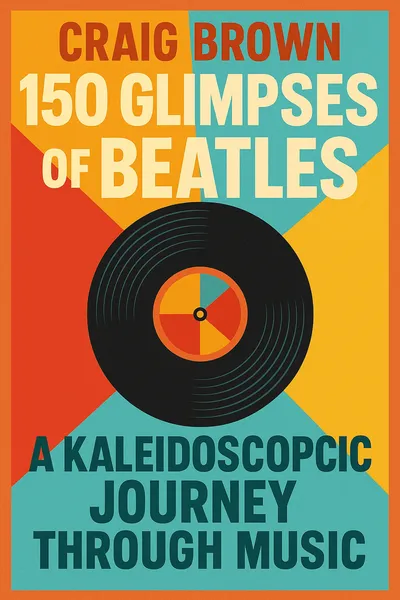
150 Glimpses of the Beatles
A kaleidoscopic journey through music
Description
Brown approaches the Beatles phenomenon through radical narrative fragmentation, rejecting traditional biographical coherence. Rather than constructing linear progression, he presents disconnected vignettes, anecdotes, and cultural artifacts that collectively interrogate how legendary status operates in contemporary society. This methodological choice reflects broader questions about authenticity, memory, and the manufacture of cultural meaning in late capitalism.
The central research question driving this work asks: How do fragmented cultural glimpses construct and simultaneously deconstruct mythological narratives around popular icons? Brown defends the thesis that the Beatles exist primarily as cultural construct rather than historical reality, accessible only through partial, contradictory fragments. The main stake involves demonstrating the inadequacy of traditional biographical approaches to comprehend contemporary celebrity mythology.
Brown successfully demonstrates the inadequacy of traditional biographical approaches to contemporary cultural phenomena. The fragmented methodology reveals how mythological construction operates through partial knowledge rather than comprehensive understanding. The work illustrates fundamental tensions between authentic experience and cultural commodification that define contemporary celebrity culture. Brown's analysis exposes how collective memory functions ideologically, constructing usable pasts through strategic selection and romantic idealization. The Beatles emerge as paradigmatic case for understanding broader cultural processes rather than unique historical phenomenon.
Table of contents
01 Fragmentation as Epistemological Method
Brown's structural fragmentation operates as deliberate epistemological strategy, challenging conventional biographical assumptions about narrative coherence and knowability. Each glimpse functions independently while contributing to larger questioning of how cultural knowledge operates. This approach reflects postmodern skepticism toward grand narratives, suggesting that understanding emerges through accumulation rather than synthesis.

02 Celebrity Culture and Authenticity Crisis
The work interrogates fundamental tensions between public personas and private realities within celebrity culture. Brown reveals how the Beatles functioned simultaneously as authentic artistic expression and manufactured cultural product, embodying contradictions central to modern fame. The glimpses expose mechanisms through which authentic experience becomes commodified spectacle, transforming genuine creativity into reproducible cultural currency.
03 Memory, Nostalgia, and Cultural Construction
The analysis reveals how collective memory operates through selective reconstruction rather than historical accuracy. Brown demonstrates how Beatles mythology depends on strategic forgetting and romantic idealization that obscures historical complexity. The glimpses expose nostalgia as active cultural process, constantly reshaping past events to serve present needs and desires.
04 Cultural Industry and Meaning Production
The final analytical axis addresses how cultural industries manufacture meaning through controlled distribution of information and imagery. Brown exposes mechanisms through which the Beatles became cultural commodity, transformed from musical group into brand identity supporting vast economic apparatus. The glimpses reveal how cultural production operates through strategic revelation and concealment, maintaining public interest through carefully managed information flows.
05 Critical Analysis and Future Directions
Brown's methodology, while innovative, risks reproducing the very fragmentation it critiques, potentially reinforcing rather than challenging contemporary attention patterns. The work occasionally indulges in nostalgic romanticism it claims to analyze critically. The focus on British cultural context limits broader applicability of insights about global celebrity culture.
Related books