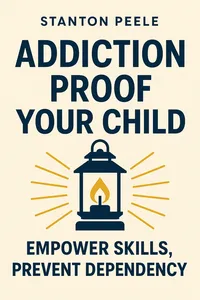
Stanton Peele
About the author
Stanton Peele is a psychologist and researcher who has fundamentally challenged conventional addiction paradigms for over four decades. Holding a PhD in social psychology from the University of Michigan, Peele has authored numerous influential works including "Love and Addiction" (1975) and "The Truth About Addiction and Recovery" (1991). His interdisciplinary approach combines psychology, sociology, and public health perspectives to contest disease-model approaches to addiction. Peele's scholarship consistently emphasizes environmental, social, and personal factors in addiction development, positioning him as a leading critic of biological determinism in addiction studies.
Peele's theoretical framework draws heavily from cognitive-behavioral theories, emphasizing how individuals develop coping mechanisms through social observation and reinforcement patterns. His work consistently argues that addiction represents a complex interaction between individual vulnerability and social circumstances rather than an immutable biological condition. This perspective has positioned him as a controversial but influential voice in addiction studies, challenging both medical orthodoxy and popular misconceptions about substance abuse.
Throughout his career, Peele has maintained that addiction prevention and treatment must address underlying psychological needs and social conditions rather than focusing solely on substance availability or genetic predisposition. His writing style combines academic rigor with accessible language, making complex theoretical concepts understandable to both professional and general audiences. This approach reflects his commitment to translating research insights into practical strategies for families and communities dealing with addiction-related concerns.